May 13-20, 2023
I had come to Israel and Palestine with one aim: to learn as much as I could.
The Middle East, and particularly the region encompassing Israel, Palestine, and neighboring territories, is a melting pot of history, culture, religion, and politics. Its complexities arise from thousands of years of human civilization, from ancient empires to modern nation-states, making it one of the most multifaceted regions on Earth.
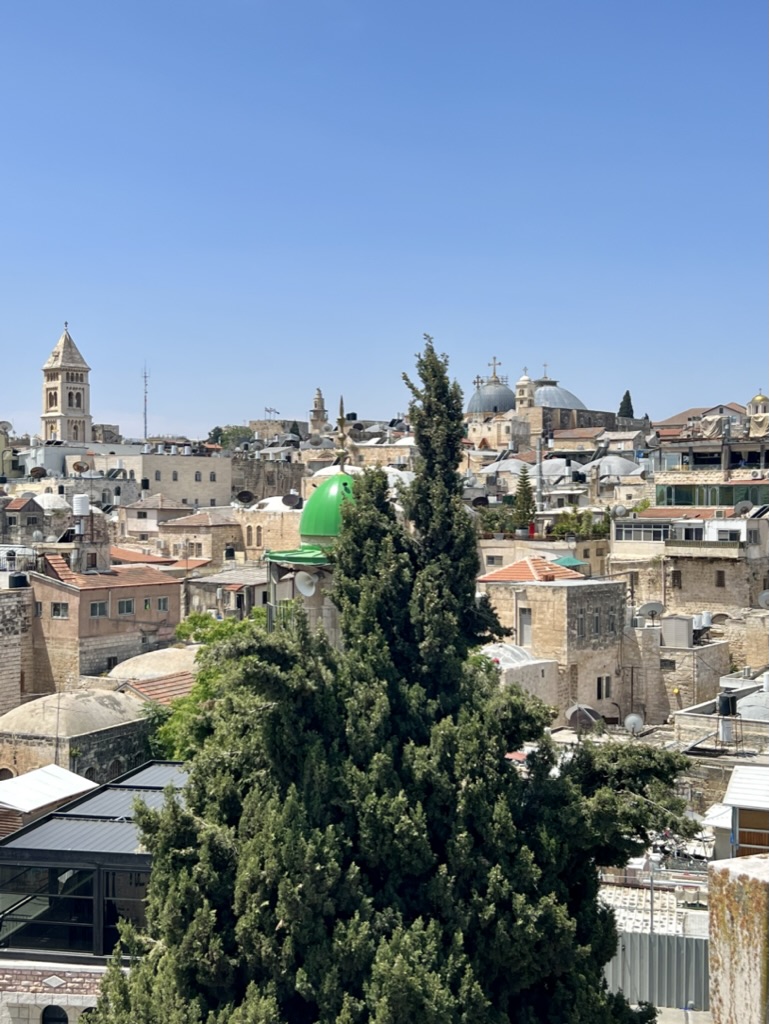
Earlier this year, I revisited the MENA countries – the Middle East and Northern Africa – with a trip to Israel. Having previously traveled to Egypt in 2009 and Morocco in 2015, I was somewhat acquainted with the sights, sounds, and cultural amalgamation of the region but this trip was uniquely enlightening. I immersed myself in understanding the region, where Western and Eastern cultures merge, where colonial-imposed borders have overshadowed tribal affiliations, and where three major religions originate, weaving a vibrant yet tense societal fabric.
I joined an iTrek tour, a peer-led experience to Israel, alongside other SIPA students. Yes, I’m back in school earning another master’s degree, a Master of Public Administration at Columbia University’s School of International and Public Affairs (SIPA). The tour’s focus, iTrek Policy, is aimed at future leaders who will go on to lead non-profit agencies and fill government and NGO roles. We interacted with a range of individuals from politicians and policy-makers to historians and journalists, gaining a more profound grasp of Israel and Palestine’s depths.
From the dominance of ancient empires such as the Babylonians to today’s modern states, the region’s history is a tapestry of overlapping narratives.
Religion
Judaism, Christianity, and Islam have left indelible marks here. Their interconnected holy sites recount shared histories, even as they underscore theological rifts.
Colonial Shadows and Modern Politics
20th-century colonial powers added another layer to this complex landscape. Their arbitrarily drawn borders often sidelined traditional tribal and cultural boundaries, resulting in today’s geopolitical challenges. Notably, the Sykes-Picot Agreement laid the groundwork for some present-day conflicts by overlooking key ethnic and religious groups.
Economic and Social Implications
The region’s socio-economic dynamics are intricate. While oil-rich nations flourish, others face resource scarcity. War-driven refugee influxes compound citizenship and economic policy challenges.
Dr. Serpil Atamaz, from California State University, Sacramento, remarks, “It’s not merely about territory but the right to self-determination. This isn’t just a conflict between Jews and Muslims or Arabs; it’s modern, not biblically ancient.”
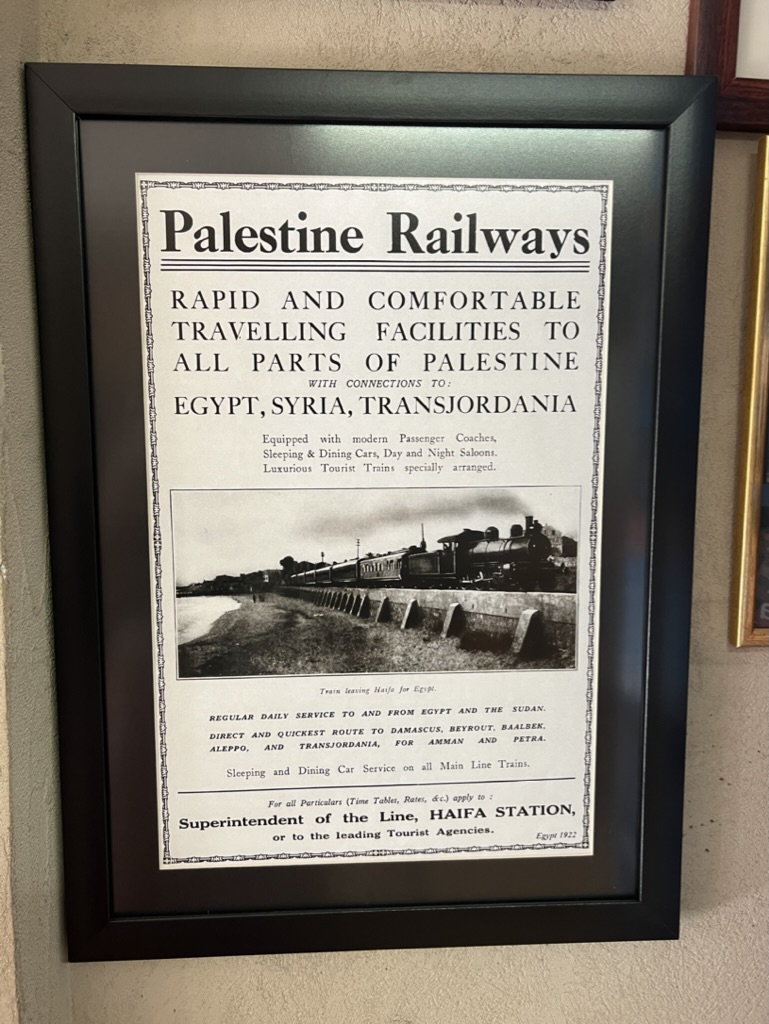
Post-World War I saw the Ottoman Empire’s dissolution. By 1922, the League of Nations had designated Great Britain as Palestine’s overseer.
The Council on Foreign Relations notes that, despite US efforts, the Israeli-Palestinian conflict’s resolution remains elusive, affected by deep-seated divisions and the US’s waning mediator role.
Many view the Israeli-Palestinian conflict through lenses of settler colonialism, ethnic cleansing, and apartheid, believing these shed light on human rights and self-determination issues. Others opine that such terms mask the Jewish people’s historical connection to the land and the establishment of Israel as an answer to age-old persecution. The debate is intense, with language often revealing underlying convictions about the situation’s root causes and potential remedies.
For now, the conflict remains one of the most intractable issues of our time.
Jerusalem: The Heart of Three Religions
Our first three days were spent in Jerusalem, which is physically controlled by Israel, but its status and the claims to it by both Israelis and Palestinians make it a unique and contested city in the context of the broader Israeli-Palestinian conflict. Myself and about half of the other students landed in Tel Aviv around 5 p.m. Saturday evening and were driven to the the Bat Sheva Hotel in Jerusalem to meet the rest of the group who had landed earlier that day.
On our first evening, we had a welcome conversation with Min Eisin that framed our upcoming week. Early the next morning, we had breakfast in the hotel, which had a stunning array of delicious options to choose from. We soon found ourselves weaving through the intricate alleys of the Old City, transitioning from them to its modern highways. Our destination: the magnificent Temple Mount and Al Aqsa.
Our entrance point to Temple Mount was the Western Wall, also known as the Wailing Wall and, in Islam, the Buraq Wall. The primary activity at the Wailing Wall is prayer. Jews from around the world come to pray at the wall, reciting prayers from the Hebrew Bible and the Siddur (Jewish prayer book). It’s common to see individuals deeply engrossed in personal prayer or in groups participating in communal prayers. Many visitors also write prayers or wishes on small pieces of paper and place them in the cracks and crevices of the wall, symbolizing a form of communication with the divine. This ancient limestone relic forms part of Temple Mount’s larger retaining structure and is a sacred hill in the Old City, revered by Judaism, Christianity, and Islam alike.
Temple Mount:
Also called “Haram esh-Sharif” in Arabic, this is where two biblical temples once stood: Solomon’s Temple (First Temple) and the rebuilt temple (Second Temple). Jews regard this as their holiest site, believed to be where God created Adam and where the binding of Isaac occurred.
Al-Aqsa Mosque:
This Islamic sanctuary on the Temple Mount is where Prophet Muhammad is said to have journeyed during the night from Mecca, later ascending to heaven. Ranking third in holiness after Mecca and Medina, the mosque’s name translates to “the farthest.”
The entire plateau of Temple Mount houses these and other structures. For Jews, the Mount is historically and spiritually crucial, being the First and Second Temples’ location. Muslims highly revere the Al-Aqsa Mosque due to its connection with Prophet Muhammad’s night journey and ascension. This religious overlap renders this site as one of the world’s most disputed and emotionally charged.
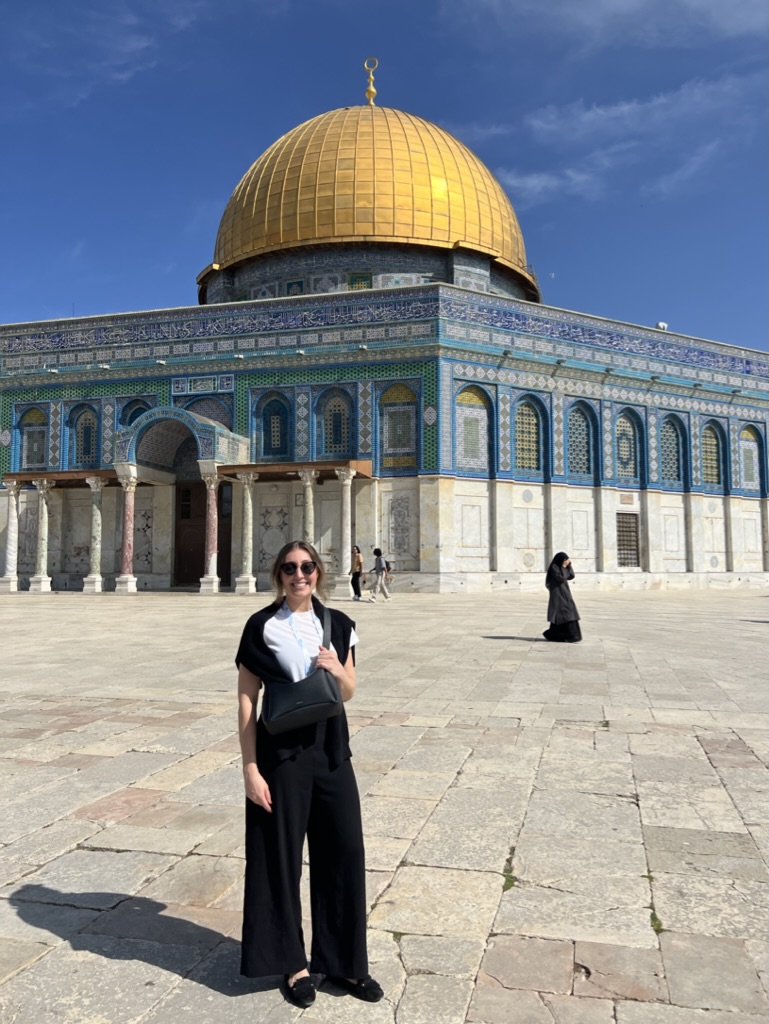

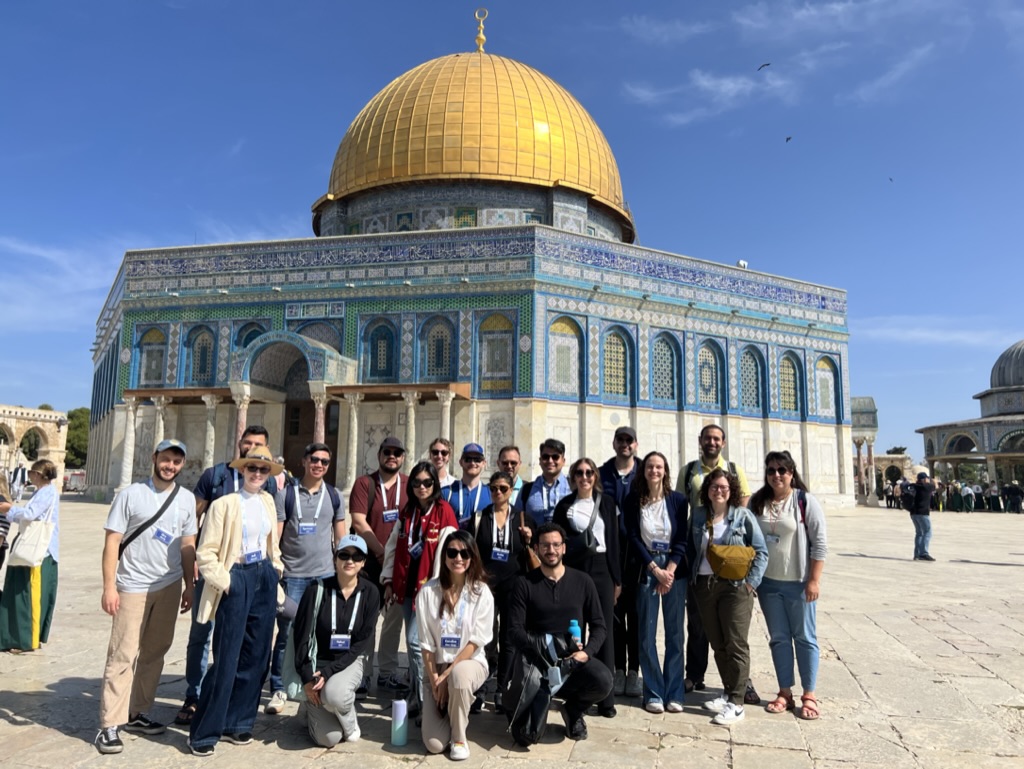

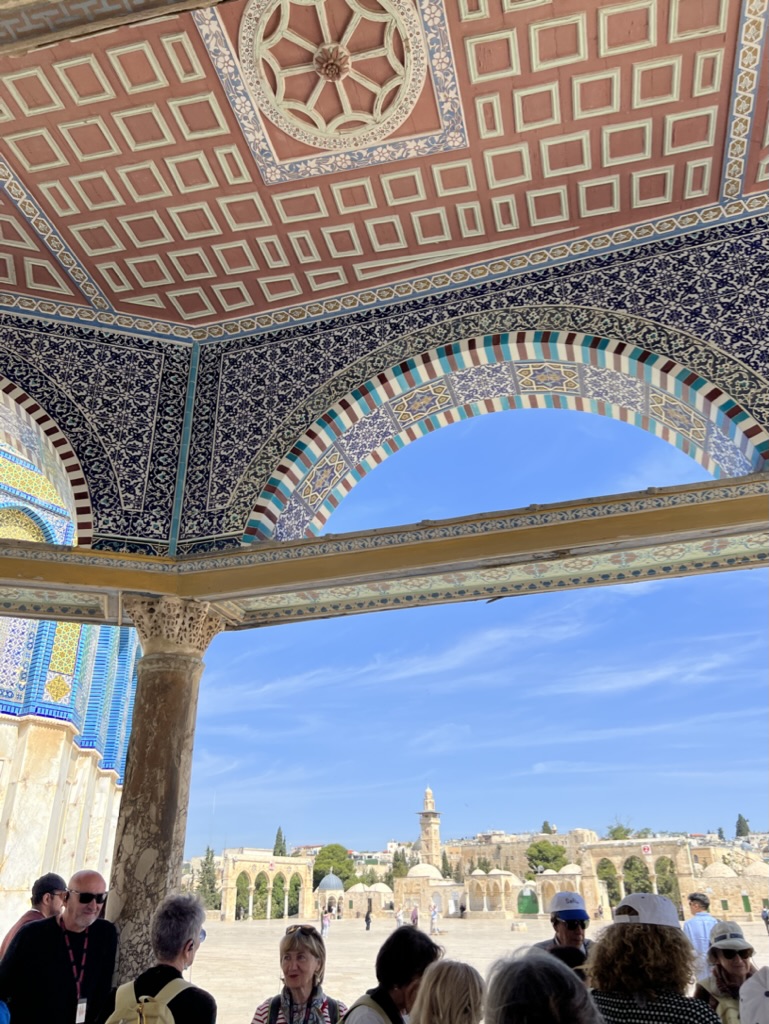


After our visit to Temple Mount, we walked the Old City, snacking on bread, savoring lunch, and following the believed path of Jesus during his crucifixion (Via Dolorosa). We also visited:
- Austrian Hospice: an excellent rooftop view of the Old City
- Church of the Holy Sepulchre: the holiest site for Christians as evidence suggests Jesus could have been buried here
- Yad Vashem: The World Holocaust Remembrance Center


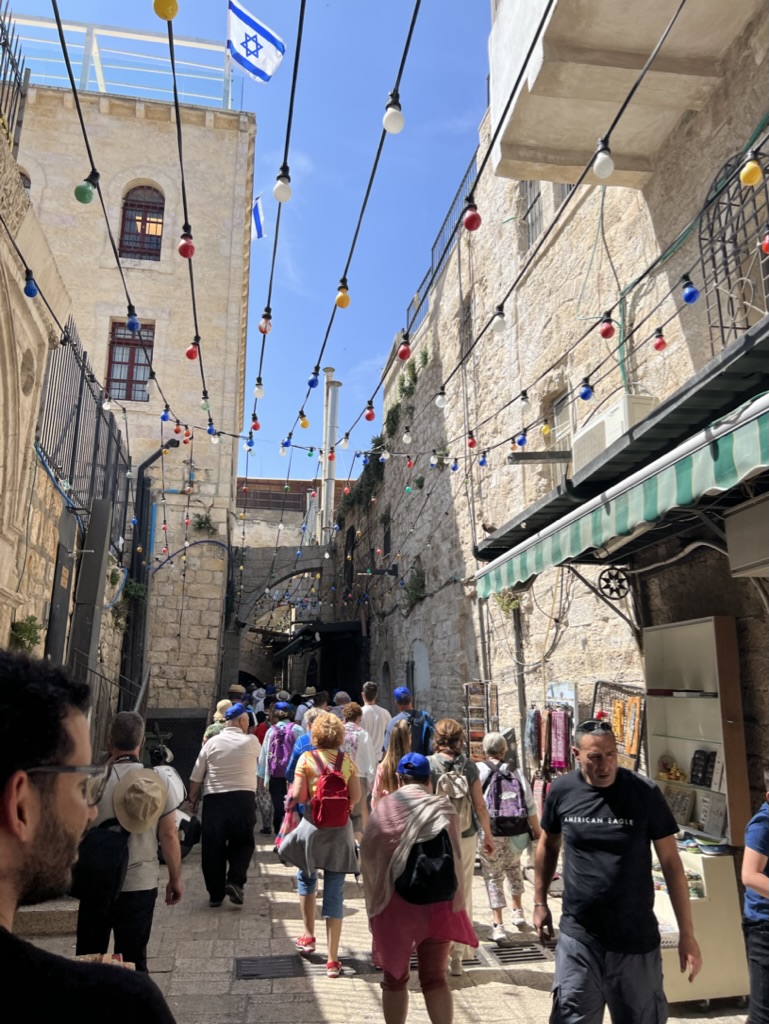


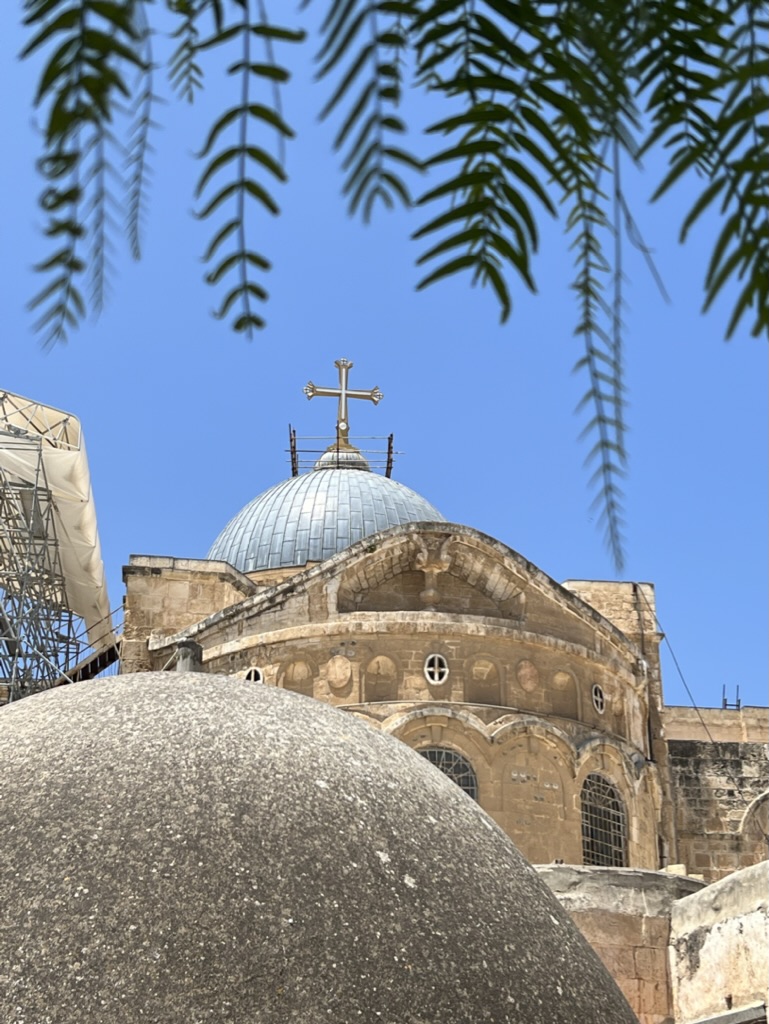


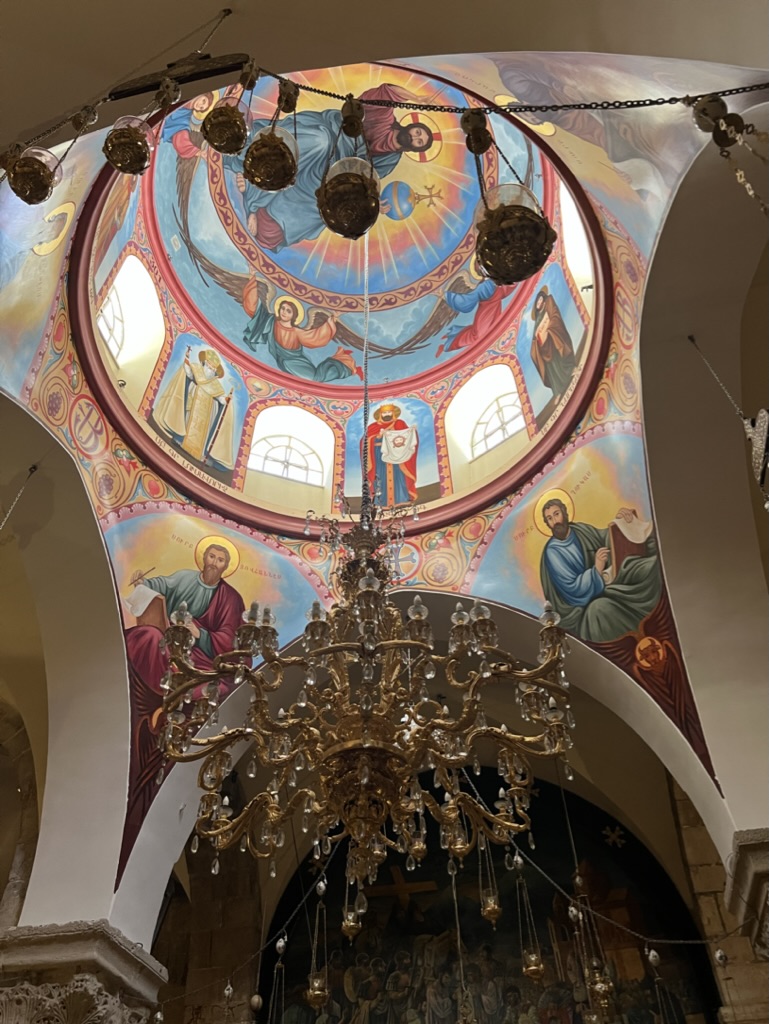


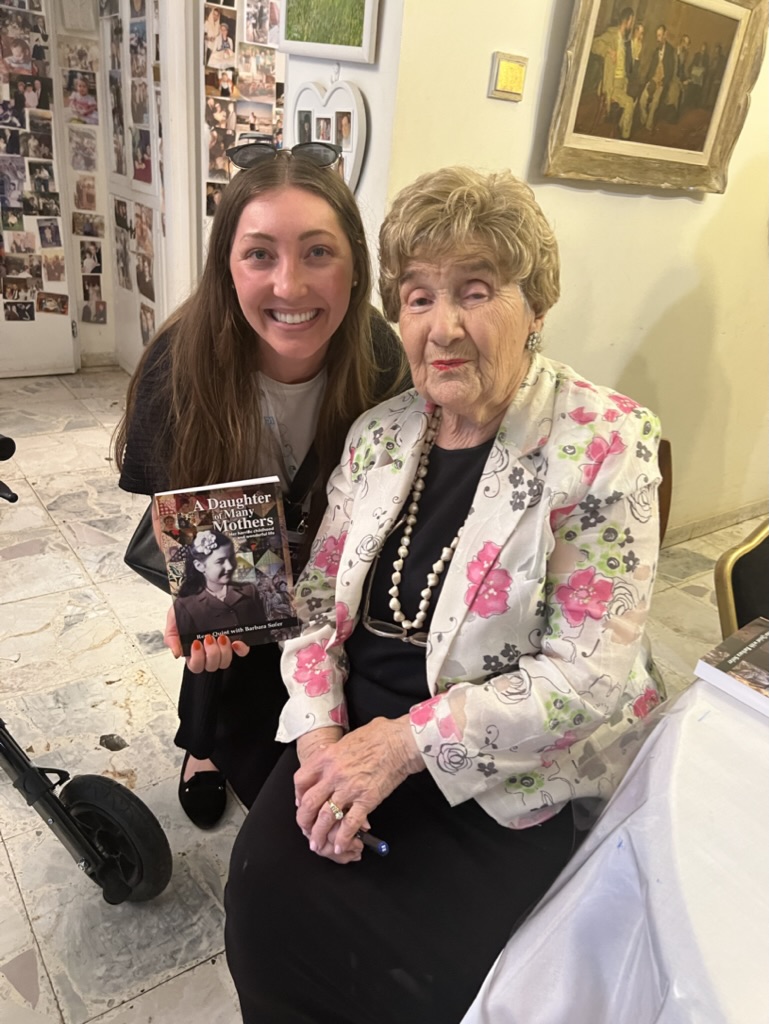
Meeting Holocaust survivor Rina Quint was an emotional experience, her story was a stark reminder of the horrors of the Holocaust and of human resilience in the face of unimaginable hatred-induced human suffering.

The next day, we explored East Jerusalem, starting at Educational Book in conversation with Mahmud Muna, the owner. He spoke eloquently and candidly about the divide between East and West Jerusalem, and about the world he wants his own daughters to be able to safely grow up in and also thrive in, to do whatever their minds and hearts desire. It gave another layer of insight into the ‘DNA’ of the city and importantly what its residents are facing, as those who live in East Jerusalem have been denied Israeli citizenship.
After learning about citizenship issues, we visited the Sinsila Center, a testament to the transformative power of community. Here, a dedicated team had revitalized vacant spaces in East Jerusalem’s core into a community garden, aiming to educate, employ, and inspire the locals.


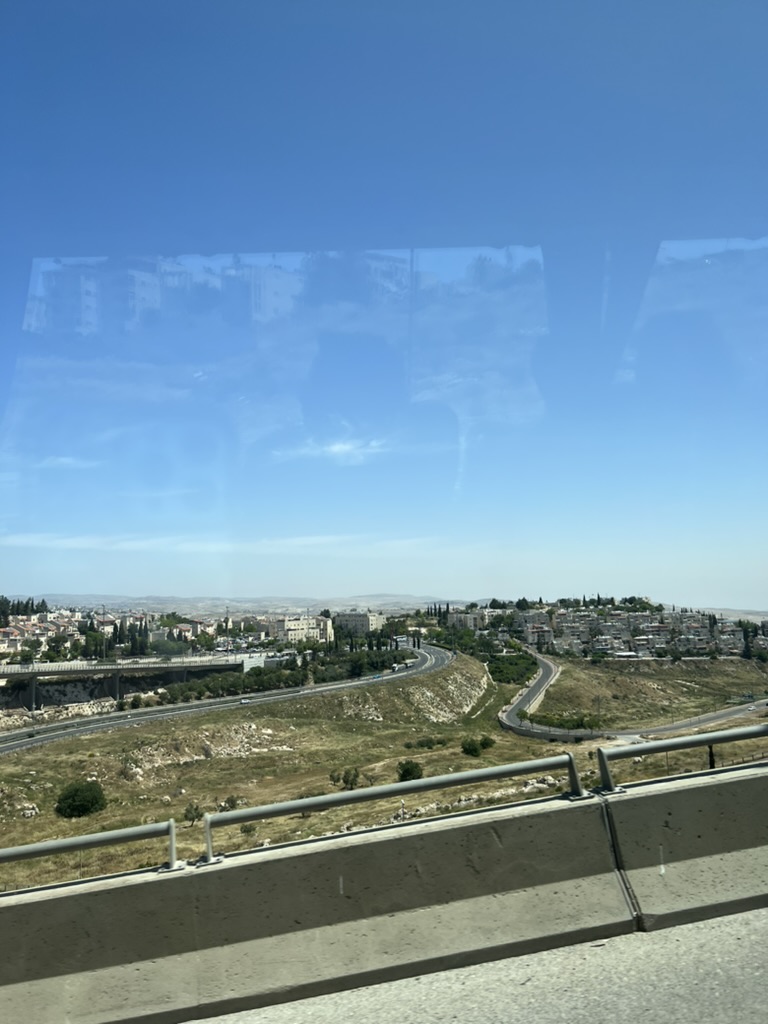
Our journey continued and we were off to one of the most anticipated parts of the trip, visiting the West Bank and the tour of Ramallah, just north of Jerusalem. To be honest, I didn’t know what to expect or have a clue of how dangerous it might be. Our guide, a seasoned Palestinian New York Times correspondent, led us through. He owns a home in Area A, the most well-kept area.
- The Oslo Accords divided the Palestinian West Bank into three administrative zones: Area A (18%), where the Palestinian Authority (PA) administers civil and security matters; Area B (22%), where the PA administers only civil matters; and Area C (60%) where Israel maintains full control.
We drove through the wall, guarded by the Israeli army, and entered Area C. Its desolation stood in stark contrast to the meticulously maintained Israeli neighborhood on the opposite side.
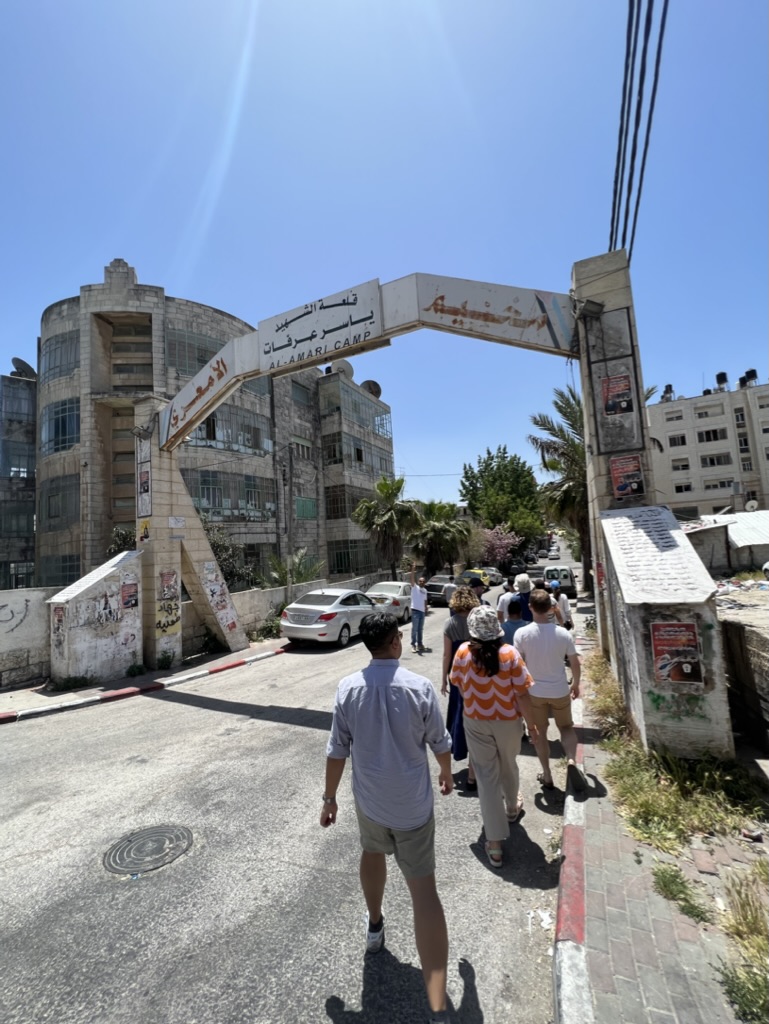
After examining the wall up close and learning its history from our guide, we reboarded the bus and headed to Ramallah and the Al-Amari Refugee “Camp.”


Ramallah, a Palestinian city in the West Bank, serves as the de facto administrative capital of the Palestinian Authority. Historically a small village known for its Christian population and agriculture, Ramallah underwent a significant transformation in the late 20th and early 21st centuries. Today, it houses various governmental institutions, NGOs, businesses, and entertainment venues. While Ramallah is known for its relatively liberal and cosmopolitan lifestyle compared to other parts of the West Bank, it has also felt the impacts of the broader Israeli-Palestinian conflict, witnessing tensions, protests, and occasional clashes.
Established in 1949, the Al-Amari camp lies within Ramallah’s city limits. Initially, it sheltered Palestinian refugees, especially from the coastal cities of Jaffa and Lydda (Lod), after the 1948 Arab-Israeli war. Over time, what began as a temporary tented setup evolved into a more permanent urbanized area with concrete structures, roads, and services, though living conditions remain challenging. Organizations like UNRWA (the United Nations Relief and Works Agency for Palestine Refugees in the Near East) offer services to the camp’s inhabitants, encompassing education, healthcare, and social services. At one point, our guide pointed out a window with the green flag of Hamas.
Hamas, a Palestinian political and militant group, traces its roots to the Muslim Brotherhood, an Egyptian religious and political organization. Founded during the First Intifada (uprising) in 1987, Hamas opposes the State of Israel, aspiring to establish an Islamic state across historic Palestine. Its military wing has orchestrated suicide bombings, rocket attacks, and other hostilities against Israeli civilians and military. Although Hamas’s primary base is the Gaza Strip, where it has governed since 2007, its influence or sympathizers are present in parts of the West Bank, including some refugee camps. Nonetheless, the West Bank’s primary political and administrative authority, especially in Ramallah, remains the Palestinian Authority, dominated by the Fatah party. The relationship between Fatah and Hamas has been historically tense and at times confrontational.
We spent 45 minutes walking through Al-Amari, staying close and largely silent. While there, we had instant coffee in a resident’s open ground-floor living area, and some young boys approached us with smiles. We moved swiftly, mostly keeping to ourselves. Our guide consistently informed residents in Arabic that we were American university students on a political tour and not Israelis—a critical distinction for safety reasons.


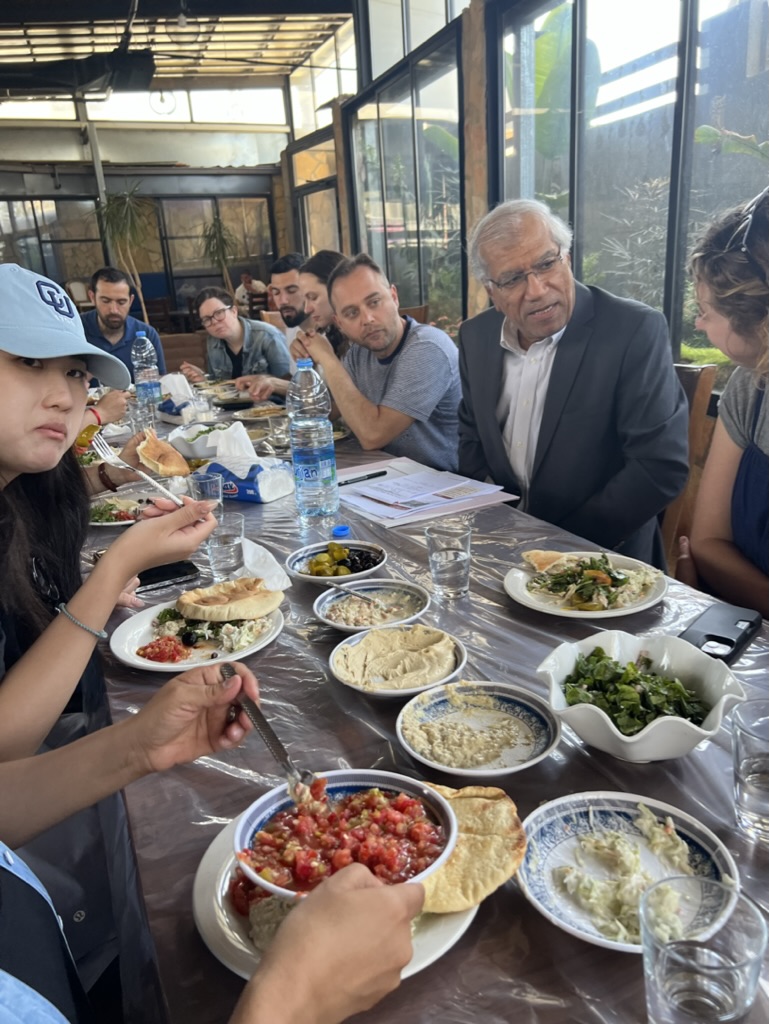
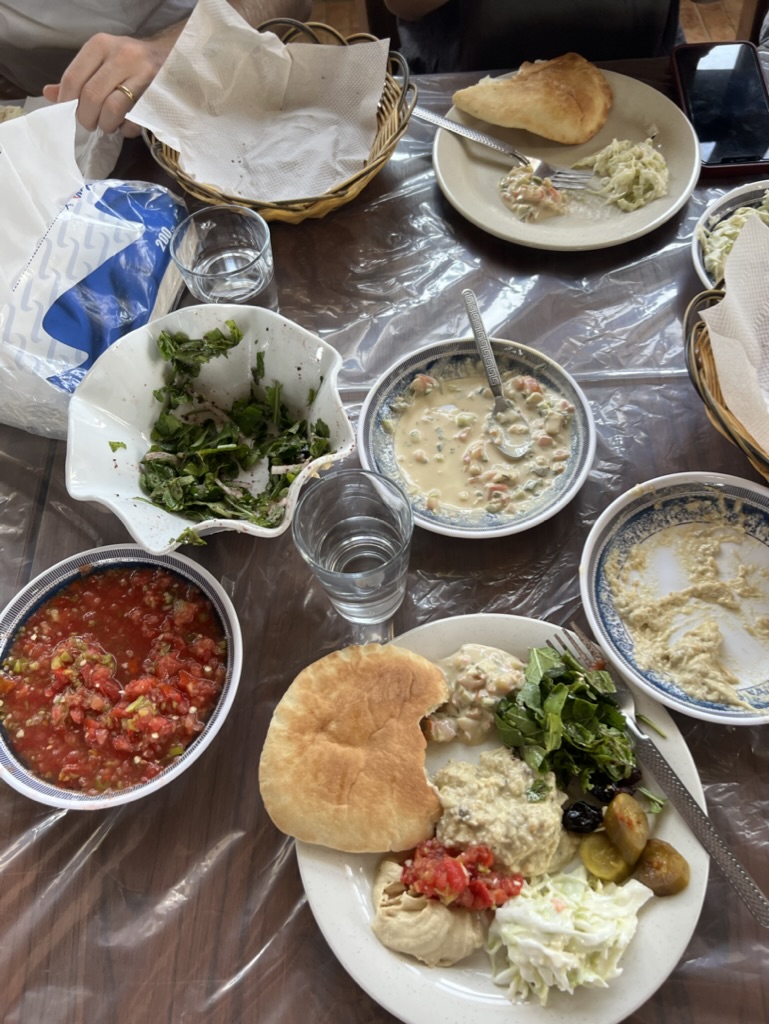
We had lunch in Ramallah with Palestinian and university professor Khalil Shikaka. His work revolves around the peace process, Palestinian state-building, public opinion, the transition to democracy, and the influence of domestic Palestinian politics on the peace process. He talked about the data he and his Israeli university counterpart had been gathering on youth political views, explaining the Palestinian Authority’s intent to retain their current 87-year-old leader due to fears of a Hamas takeover. The conversation was captivating and, at times, unsettling, echoing some of America’s own political issues. The food was delightful.
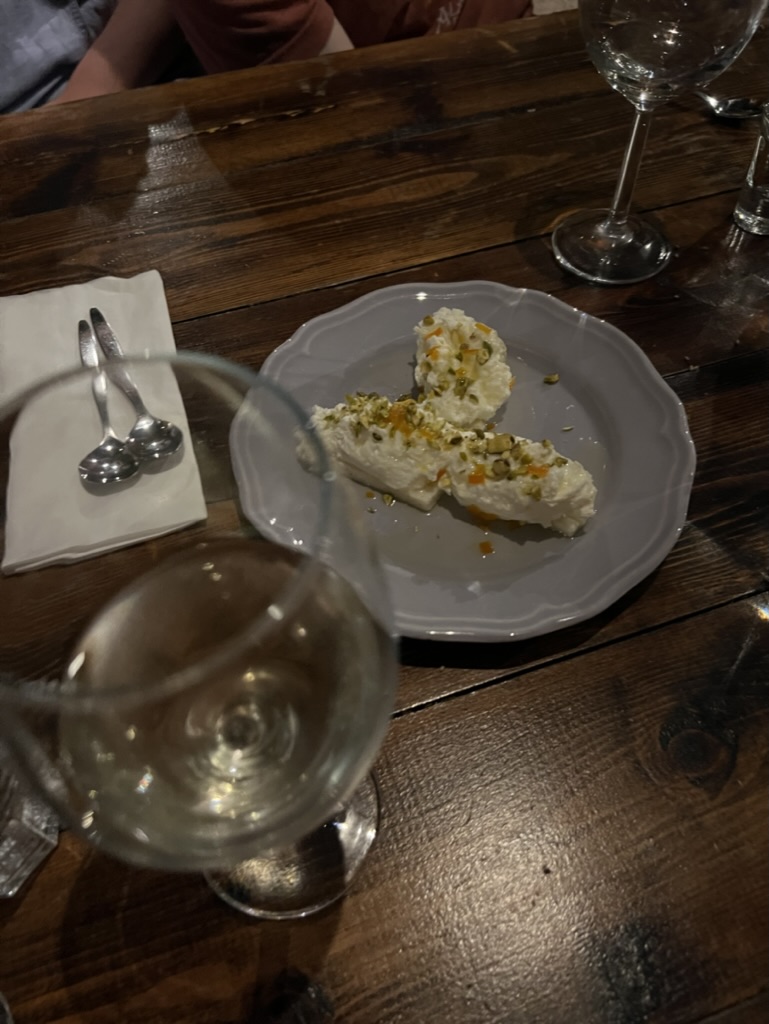
After a very full day, we returned to Jerusalem. On the way we made a pitstop at a lookout point and Paul, our fellow SIPA student and Israeli who was responsible for leading our group, bought a tray of his favorite dessert, knaffeh, to share with us all. Knaffeh is a traditional Arab dessert comprising layers of shredded phyllo dough and sweet cheese, all drenched in sugar syrup. From there, we headed to his alma mater, Shalem College. We engaged in a candid discussion with Kris Fresonke, Deputy Political Chief in the U.S. Office of Palestinian Affairs, U.S. Department of State. Several current university students joined our roundtable, and for dinner, we opted for a universal favorite—pizza. This quintessential student meal was fitting for our evening dialogue. After a day packed with in-depth exploration of politics, economics, and policy-making, we returned to our hotel for a much-deserved restful night’s sleep.


On our last day in Jerusalem, I woke early to enjoy the hotel’s delicious breakfast one final time. Then I strolled the neighborhood and Ben Yehuda St, a pedestrian-friendly zone teeming with shops, cafes, and eateries, in search of a morning coffee. Our next adventure awaited – a day at the Dead Sea.


The Dead Sea and the Sea of Galilee:
Our journey to the Dead Sea and the Sea of Galilee provided a welcome change of pace. We made the Selina Kinneret Hotel, perched beside the waters, our base for the night. However, the real highlight was a lavish meaty dinner, after which we danced on the beach beneath the starlit Galilean sky.
As we traveled, fields of date palm trees, my personal favorite, stretched out before us. The landscape evoked memories of the expansive terrains in eastern Washington State, Oregon, and central California. Later that evening, en route to dinner, we journeyed through the Golan Heights. The sight of acres of vineyards set against cliffs and rolling hills was strikingly reminiscent of home. It was truly beautiful.
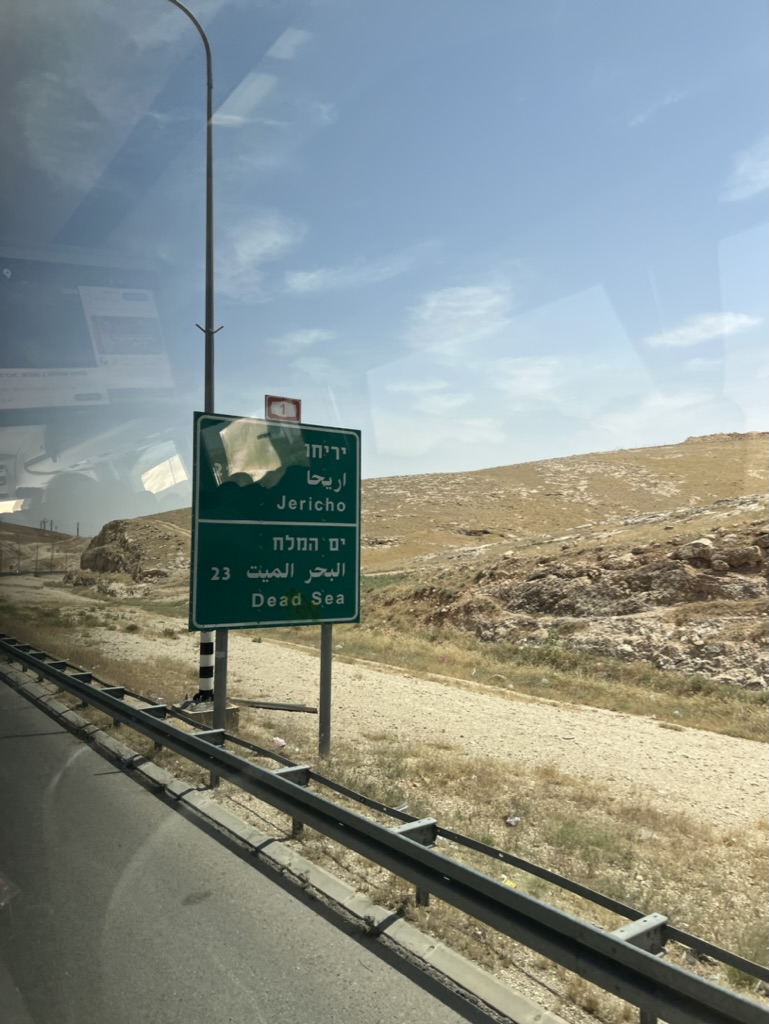

The Dead Sea has been shrinking at an alarming rate, about 1 meter per year, and our fantastic guide Abigail Koperman who was assisting Paul for the entirety of the trip, let us know it had retreated 30-40 meters in just the last few decades, showing us the point at which it used to rise to. The shrinking is mostly due to diversion of water sources, mineral extraction, and natural evaporation.
The Dead Sea attracts tourists for its exceptionally high salinity, which allows visitors to float with ease, and for its therapeutic, mineral-rich mud known for skin benefits. As a fun prop for photos, many of us floated while reading The New Yorker magazine I had brought along. Naturally, we didn’t miss the opportunity to apply the beneficial mud all over ourselves. A word of caution we received from our guides? Avoid passing gas in the water; the high salt concentration might lead to a momentary stinging sensation. Lol.


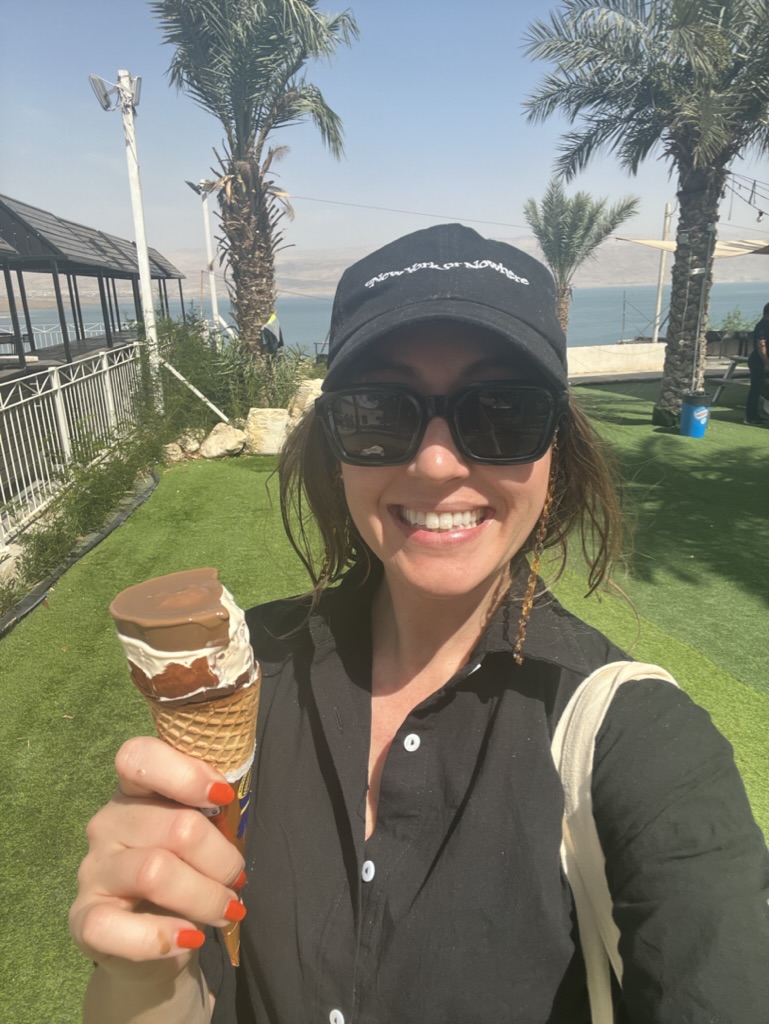
After grabbing a few face masks from the gift shop and eating an ice cream cone in the scorching 110-degree sun, I showered and settled into a nap on the bus as we headed towards the Sea of Galilee, and a relaxing night next to the water.


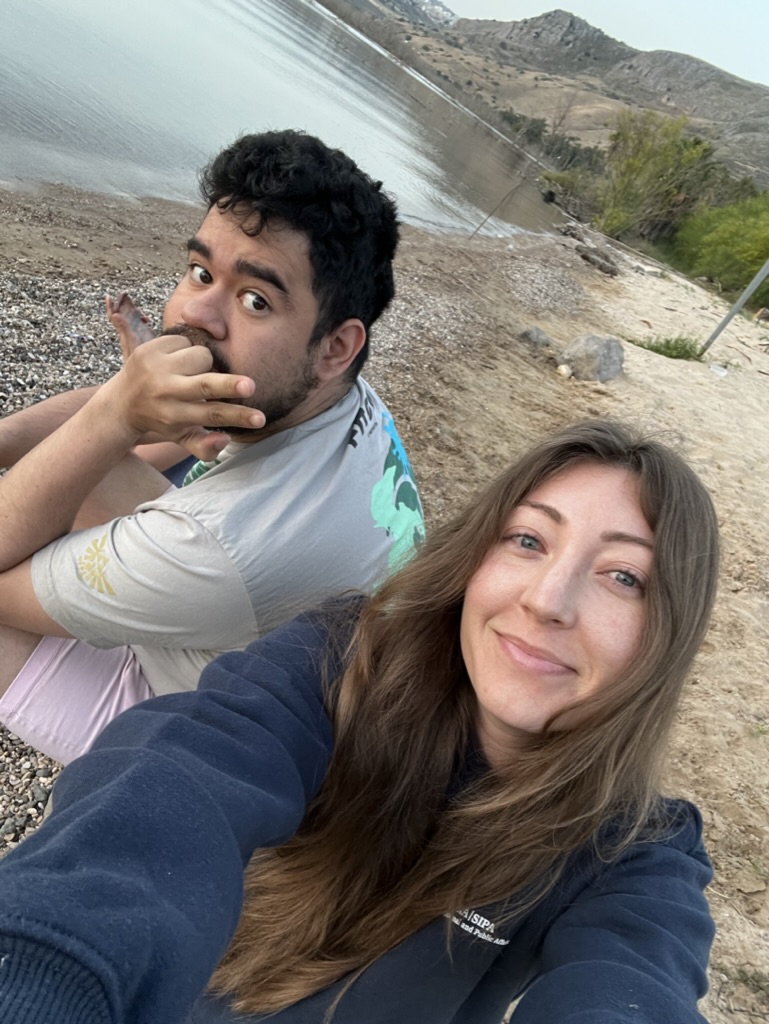

A few of us woke around 5 a.m. the next day to catch the vivid sunrise over the serene waters. That day, our journey to Tel Aviv had multiple stops planned. Our first destination was Capernaum. This ancient fishing village holds reverence as the place where Jesus lived and preached. It boasts a collection of well-preserved archaeological treasures, including an ancient synagogue and what is believed to be the house of Saint Peter.
After that, we visited the Alma Center for an enlightening discussion with representatives from different identity groups in Northern Israel. The Alma Center is an education and research center, dedicated to researching the security challenges on Israel’s northern borders and educating opinion-makers from research centers, academia, and others on the multi-dimensional complexities in the Middle East. During our visit, we heard from two women: one from the Druze community and the other of Lebanese-Christian heritage. Both were eloquent in sharing their cultural and historical backgrounds, their day-to-day lives, and how they perceive their place in the broader Israeli society. Northern Israel boasts a rich diversity, where numerous communities have coexisted harmoniously for years.


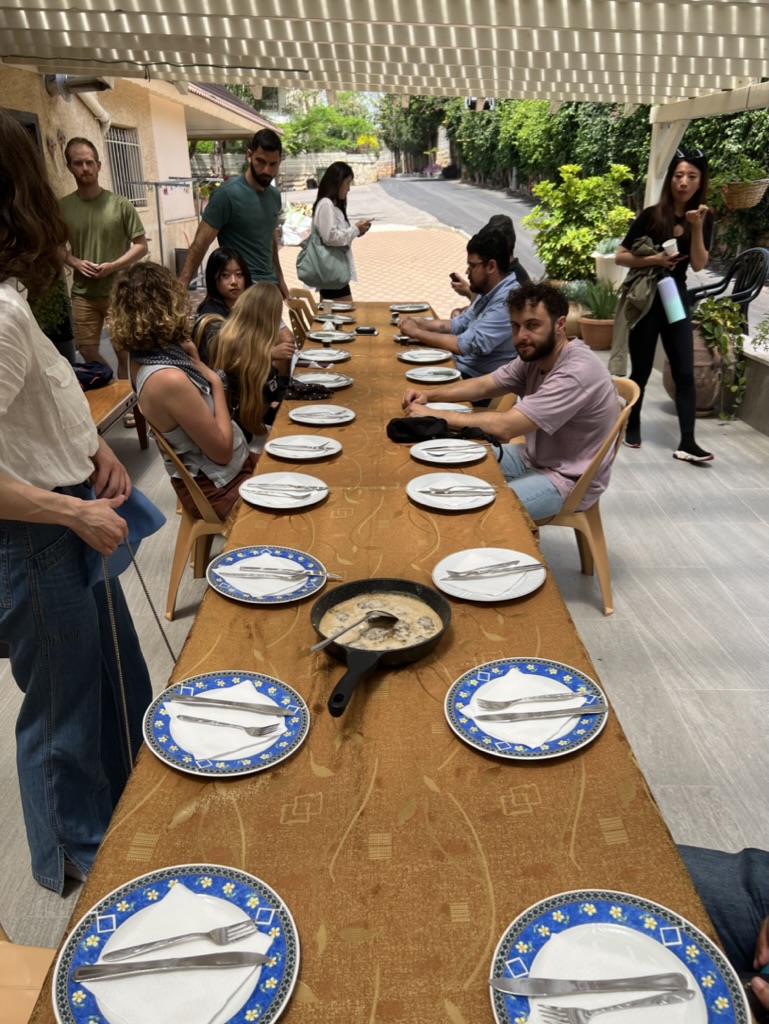
Our lunch took us to Yarka, where a Druze woman and her mother-in-law treated us to a delectable homemade meal. It was the perfect culmination of our time in Northern Israel.
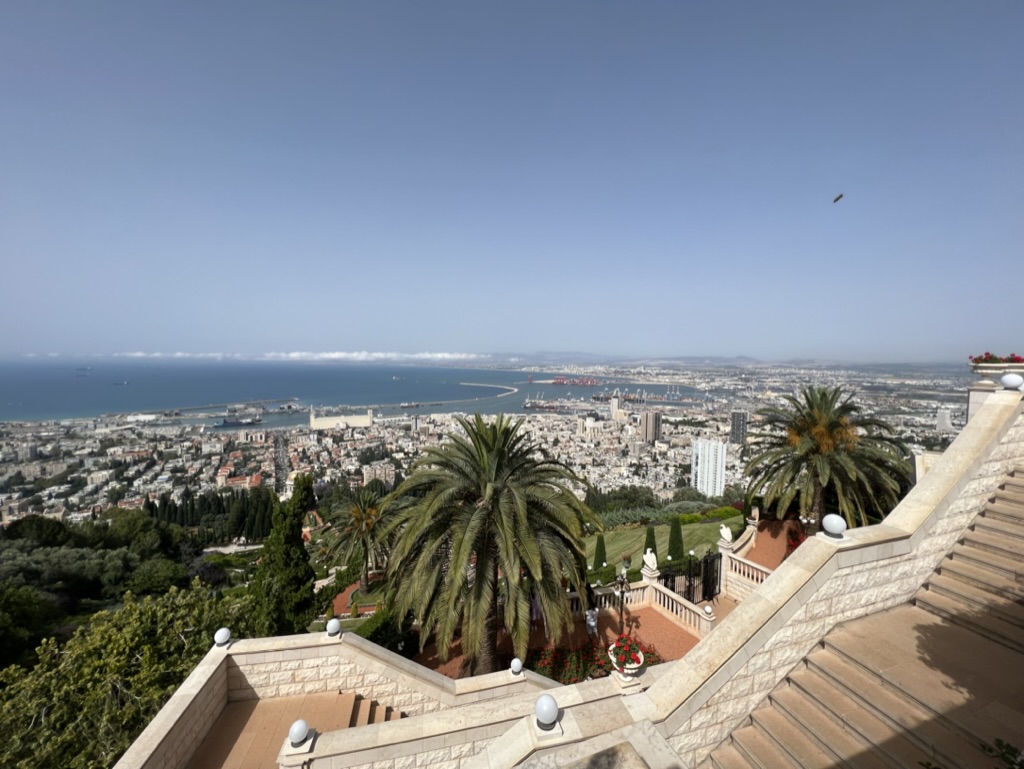
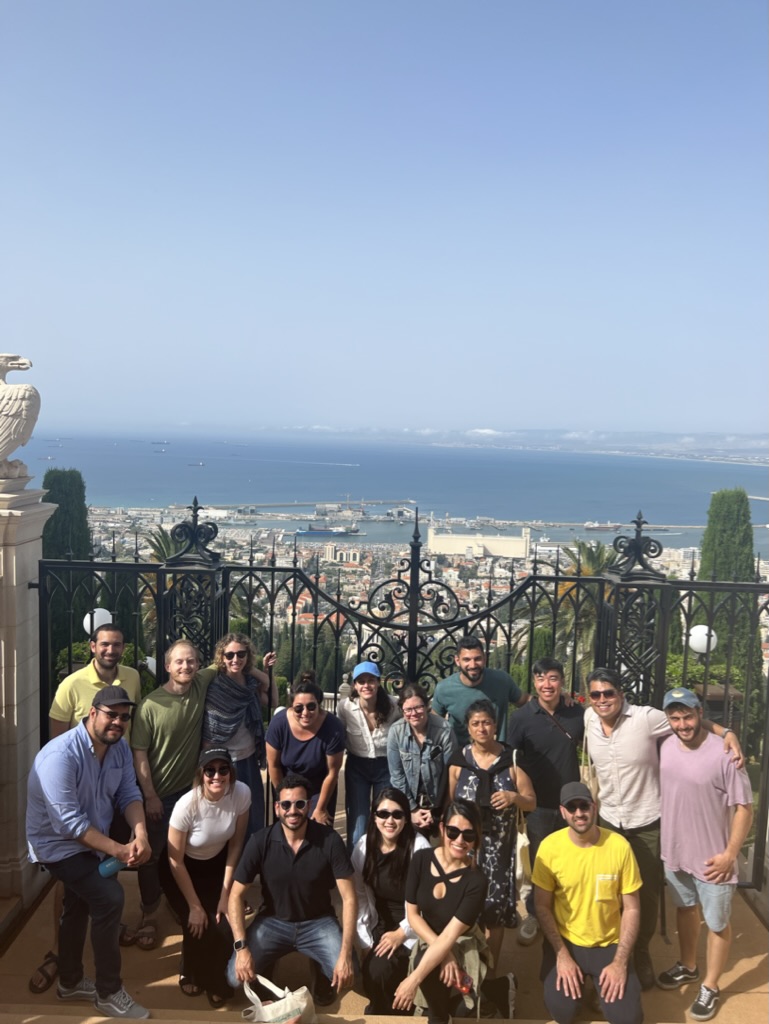
Abigail informed us of a spontaneous detour to the Bahá’í Gardens in Haifa. Cascading down Mount Carmel’s northern slope, these terraced gardens are not only a pilgrimage site for Bahá’í adherents but also an epitome of garden design. Also referred to as the Hanging Gardens of Haifa, they were established in honor of the Báb, the precursor to Bahá’u’lláh, the Bahá’í Faith’s founder. Under the Bahá’í leadership’s guidance, these gardens were designed and erected to complement the Shrine of the Báb and to offer a space of reflection and meditation for both Bahá’ís and other visitors.

Tel Aviv: Where Ancient Meets Modern
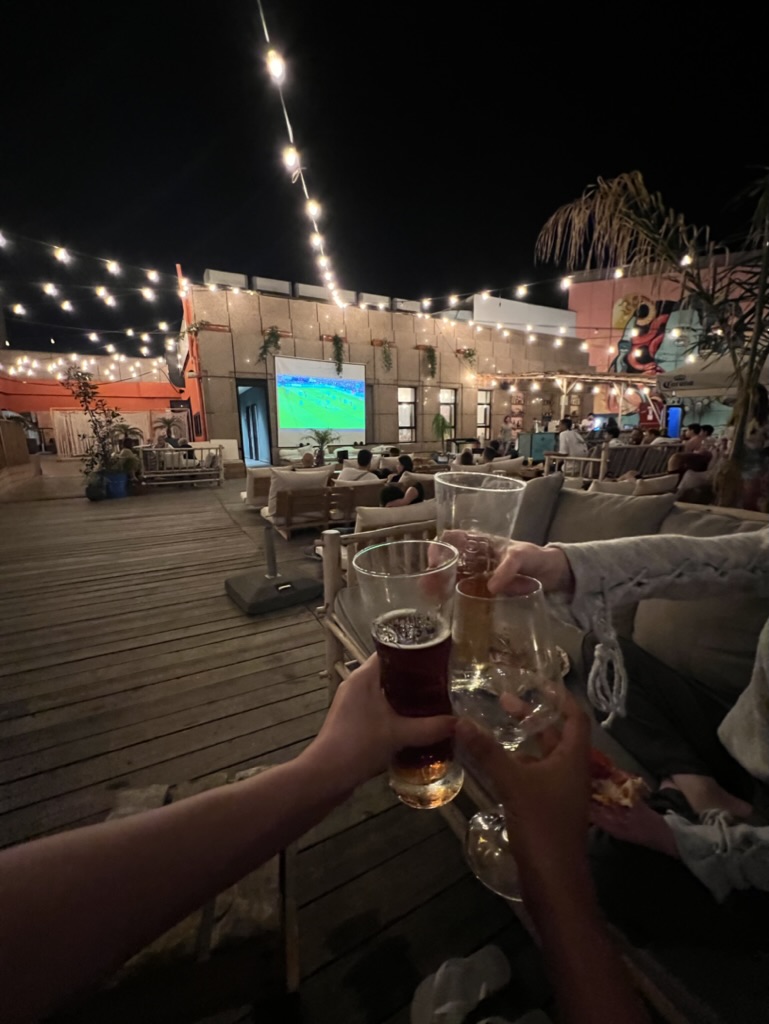
Soon after arriving in Tel Aviv, we checked into the Selina Beach Hotel. That evening, many of us gathered at the hotel’s rooftop bar, claiming our complimentary welcome drink, ordering bar food and additional beverages, and settling in to watch the evening’s football (soccer) match. It was a relaxed introduction to the city, perfect as we faced another early start the next day.

At 9 a.m. on Friday, we had a meeting with the former Ambassador to Israel, Dan Shapiro. Fortuitously, Dan had been advising on a project in my office at Columbia University and was going to be in Tel Aviv at the same time as our group, so I asked if he’d be willing to meet with us. He enthusiastically agreed, for which I was incredibly grateful. Dan’s brilliant insights and well-rounded perspective on Israel enriched our understanding of international relations, providing an invaluable platform to discuss and digest our experiences from the week.
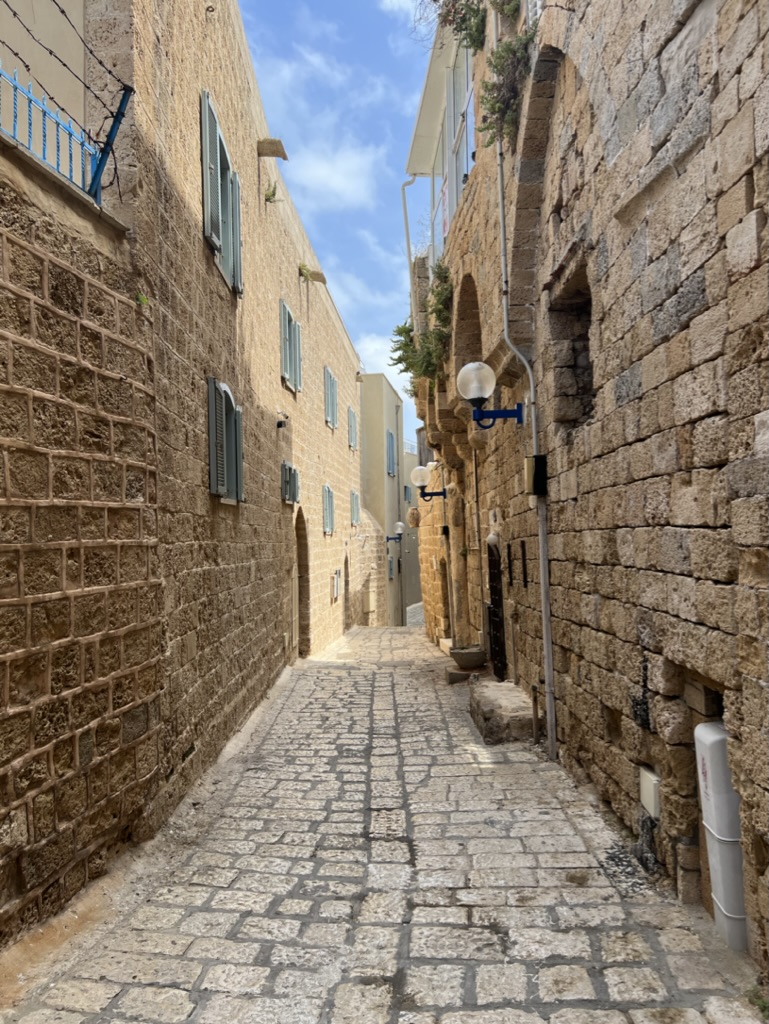
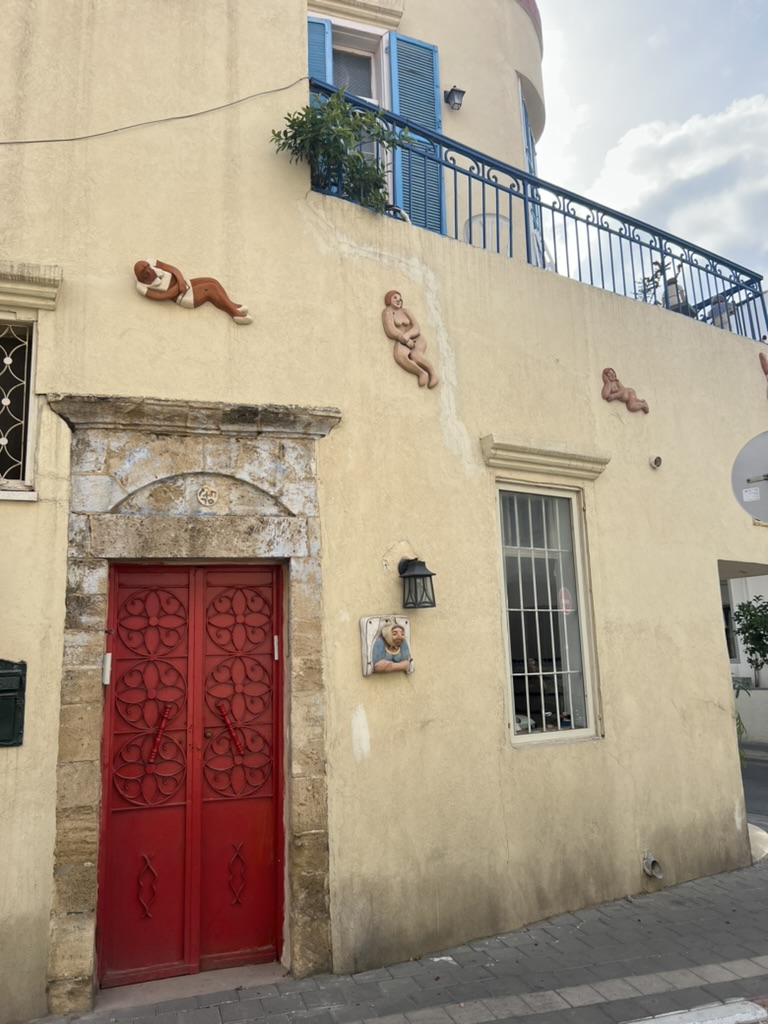
After a robust conversation with Dan, we explored Jaffa’s historic streets, a striking contrast to the modernity of downtown Tel Aviv. We meandered for a while before breaking for lunch on our own. Luckily, I heard Eduardo talking about recommendations a local friend had shared with him and I immediately knew I had to tag along. The two of us, joined by Bridget and Anita, lunched at HaBasta, which boasts the title of being among the Middle East & North Africa’s 50 Best Restaurants for the past two years.



Our appetites satisfied, we took Paul’s recommendation and hurried to Otello for their in-season pistachio gelato. The gelato, complemented with a warm dark chocolate-lined cone, was the best I’ve ever had. This delightful diversion made us a mere five minutes late to our appointment at Start-Up Nation, but it was well worth it. Start-Up Nation is a non-profit organization that bridges Israeli innovation with global challenges.

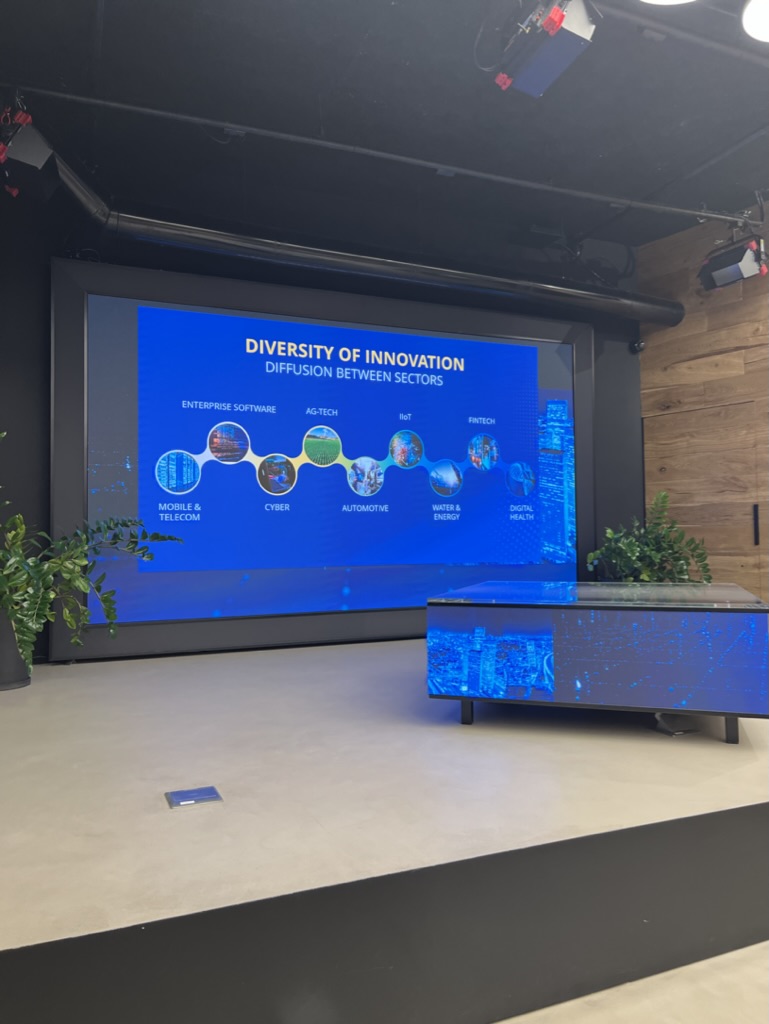
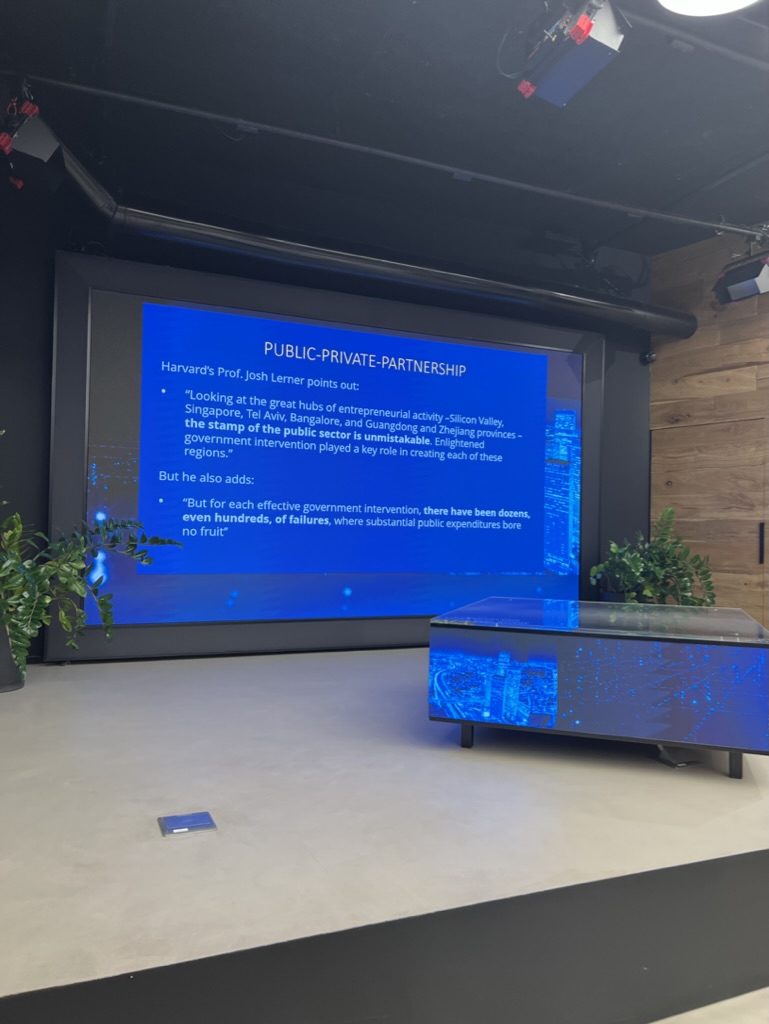
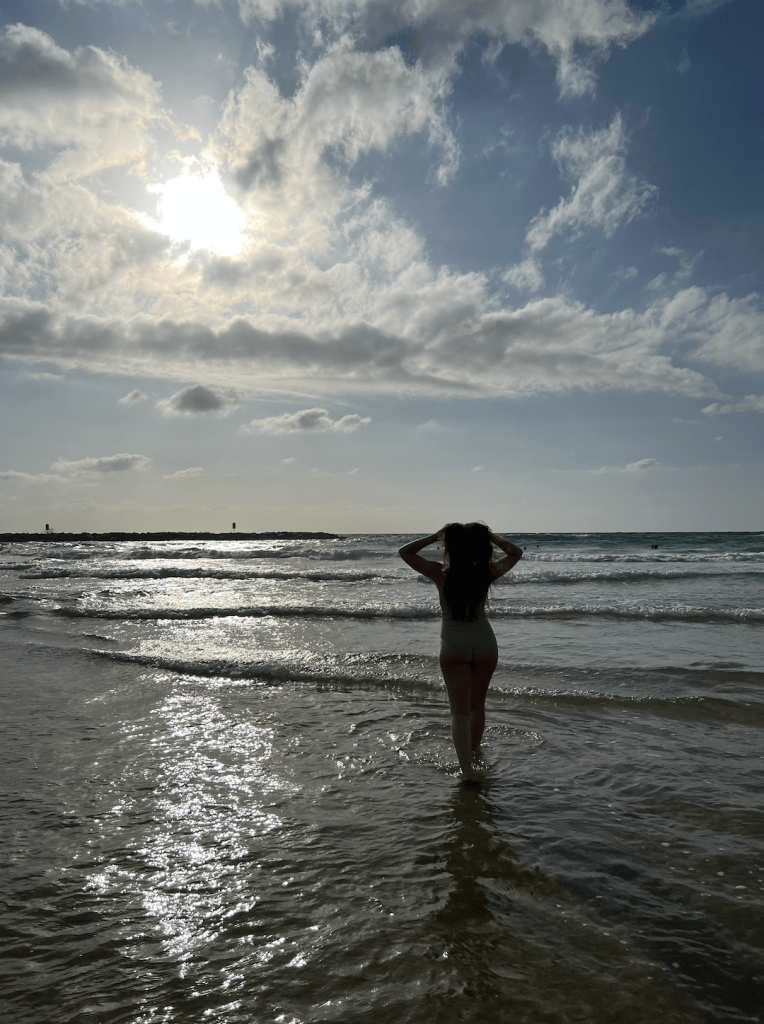
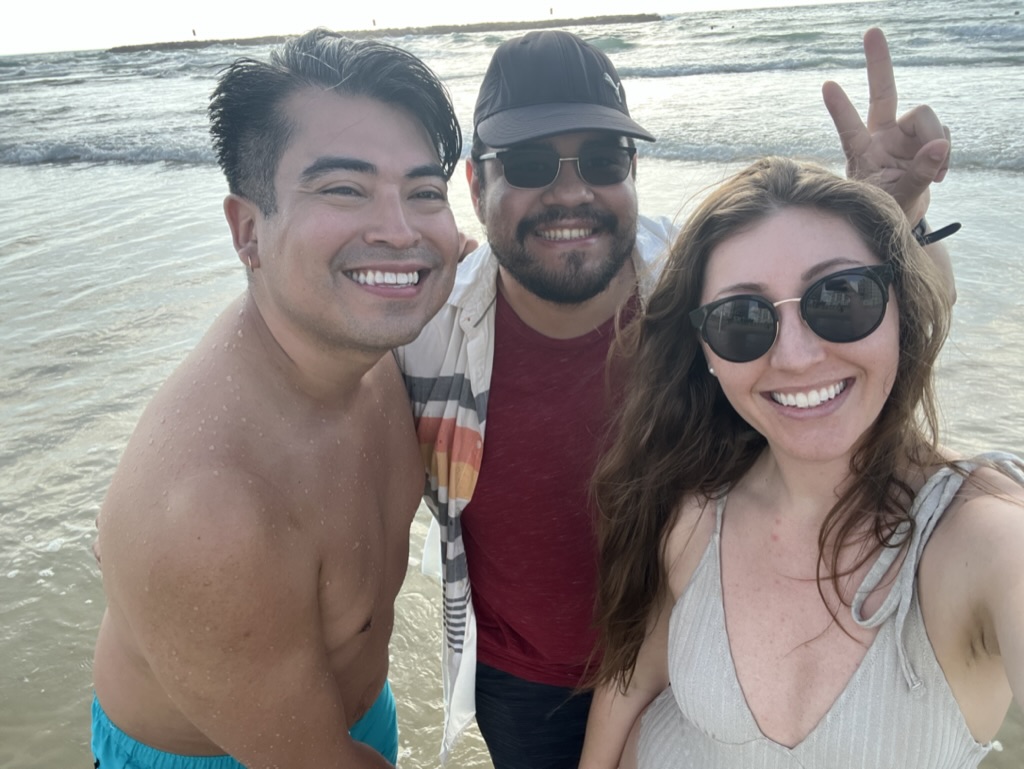
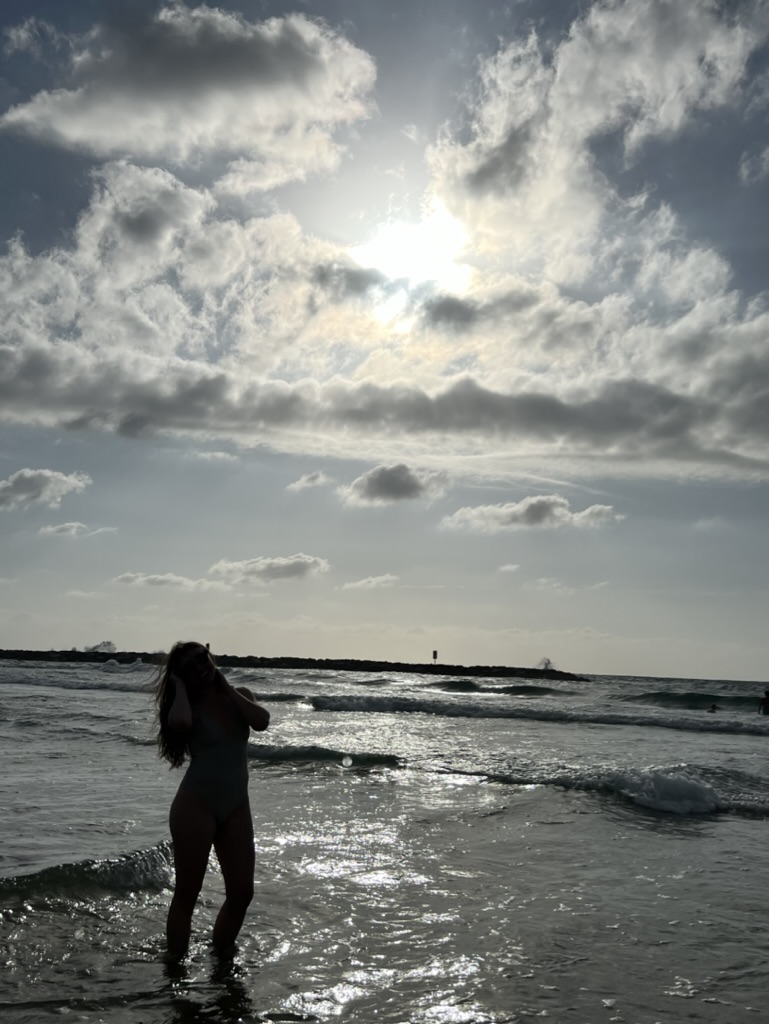
The early evening found us at the beach, soaking in the Mediterranean before retreating to our hotel’s rooftop for cocktails and a final group reflection session.
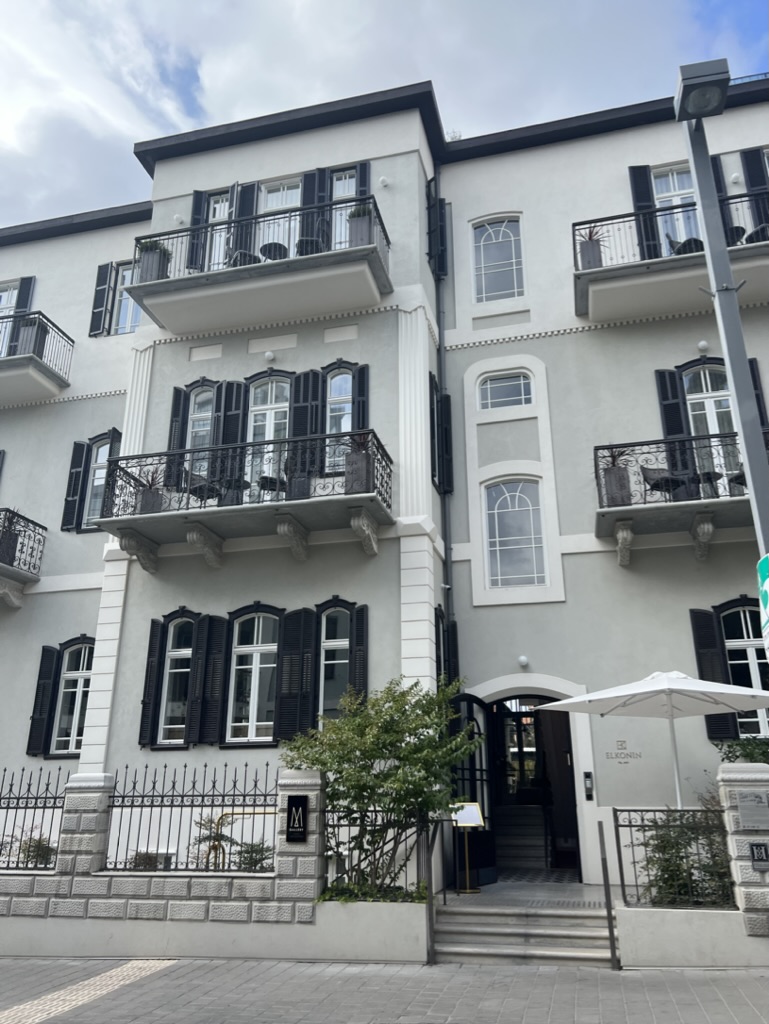

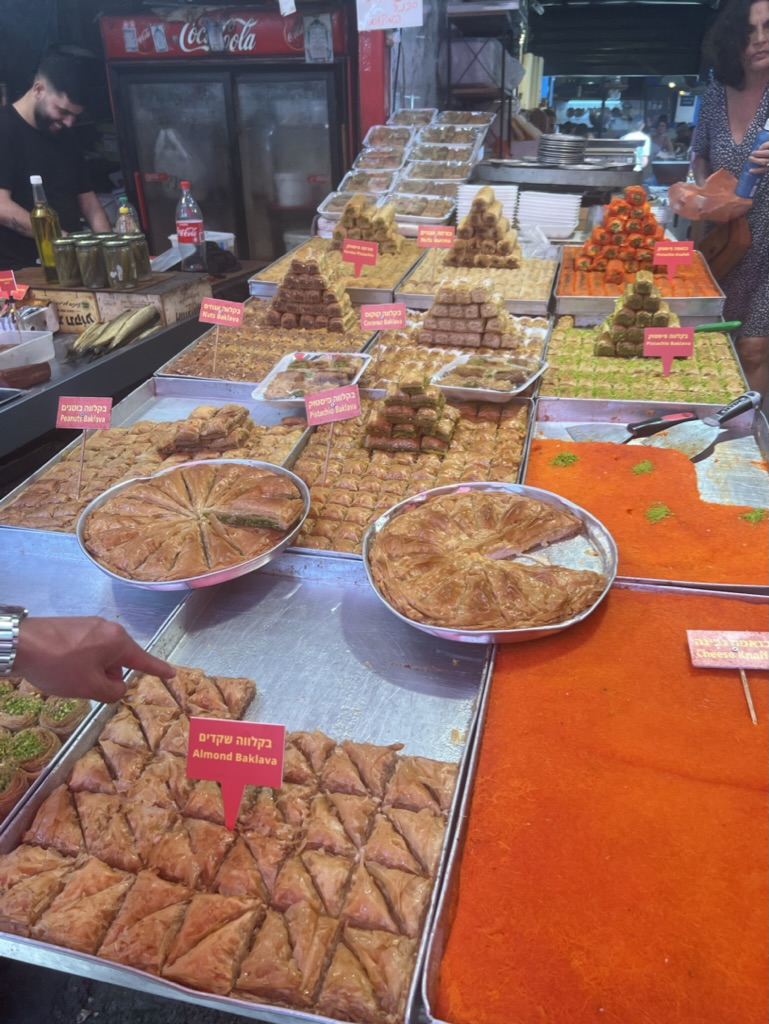
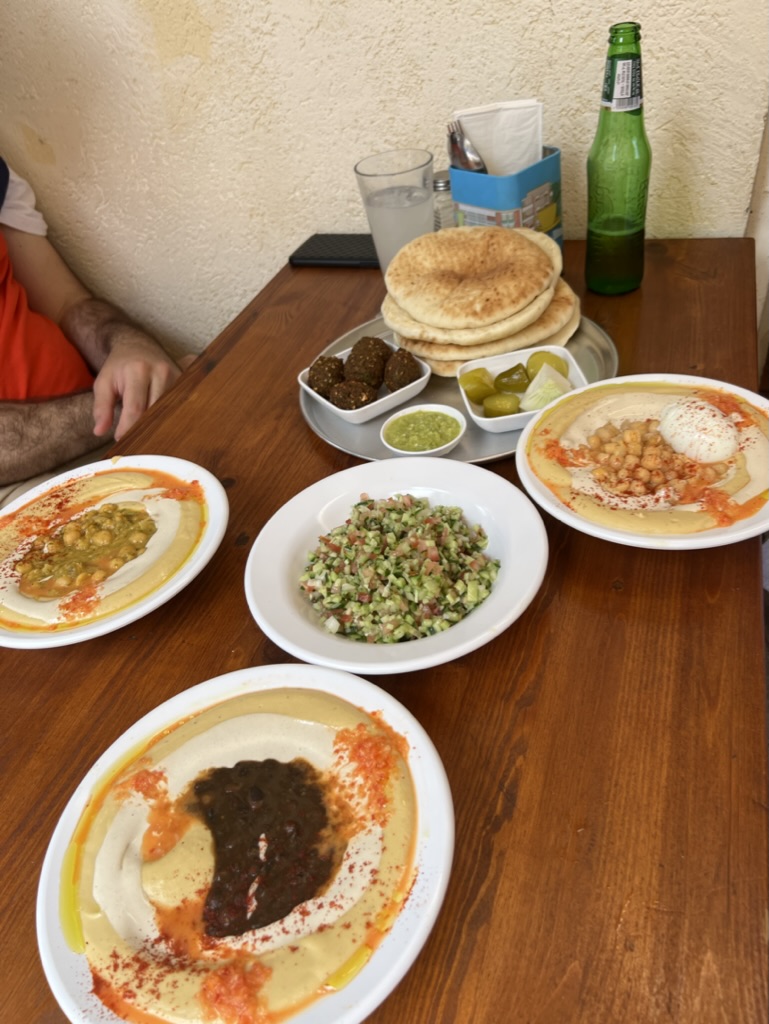
The next day began with a quest for coffee. A few of us followed a recommendation from Abigail and visited Tamati, after which we plunged into the vibrant chaos of the Carmel Market. Known as “Shuk HaCarmel”, this is Tel Aviv’s primary open-air marketplace, offering everything from fresh produce to eclectic goods, reflecting the city’s dynamic spirit. After purchasing spices for a homemade shakshuka, we discovered a quaint café in a side alley for a beer. Taking a cue from Eduardo again, our lunch choice was Asi ve Adnan, where the warm hummus, complemented with an egg and spicy sauce, was simply sublime.





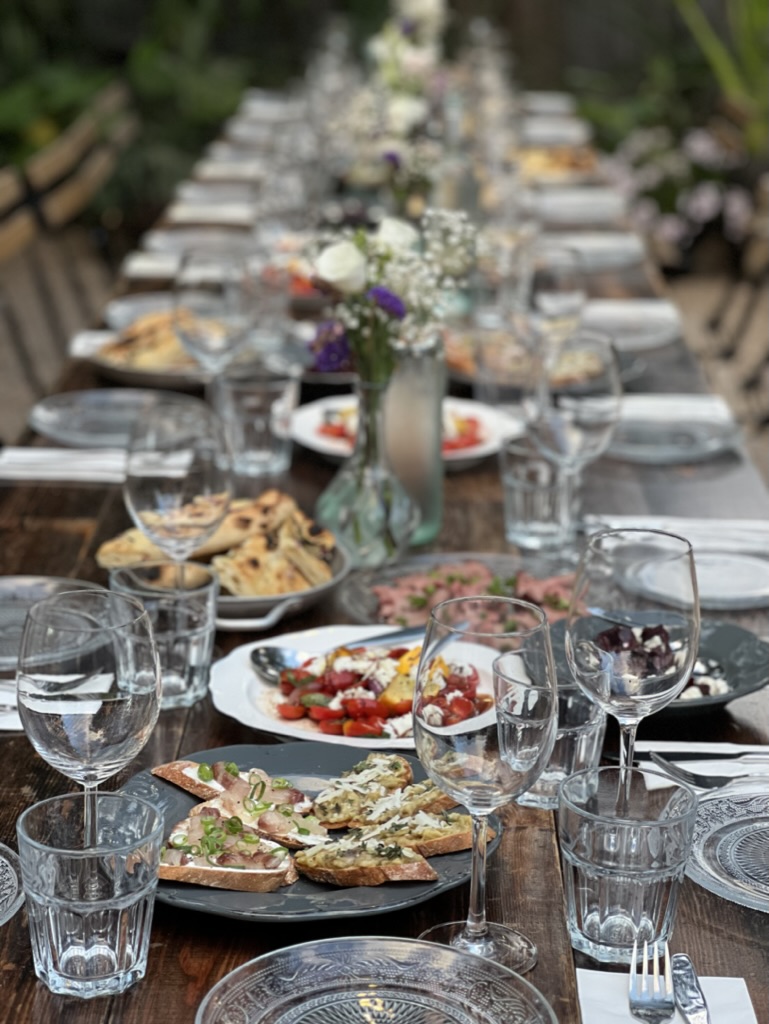
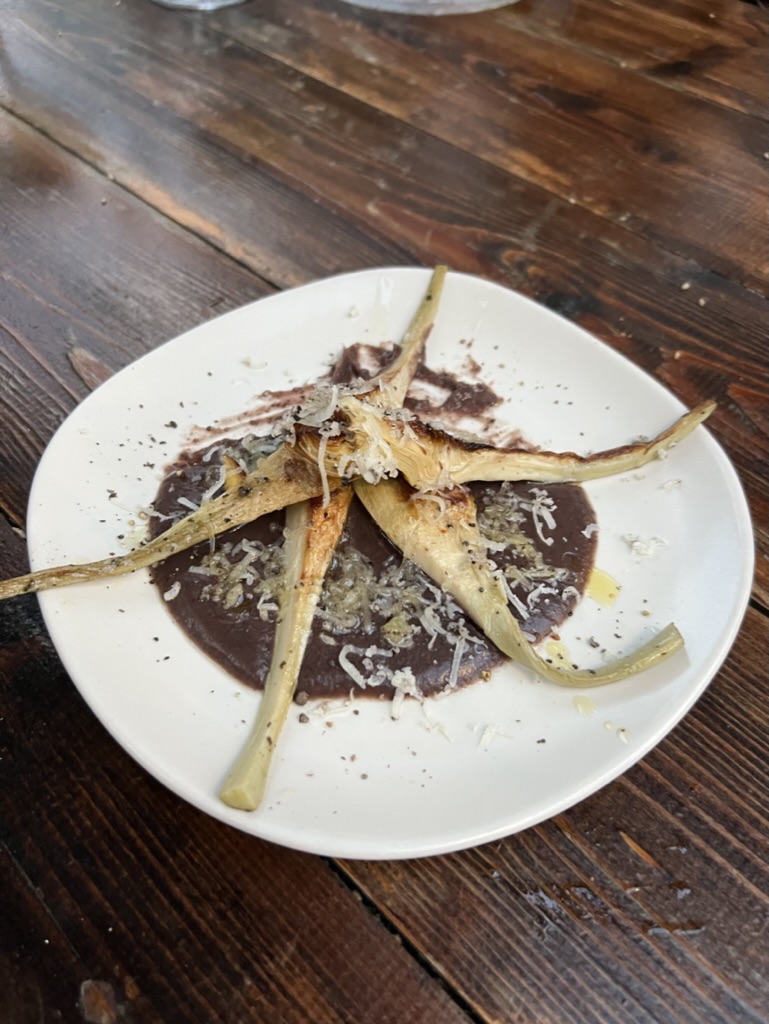
I spent the early afternoon resting, cleaning, and packing. The next day, Saturday, was already time to depart. But first, our group would share in an intimate and stunning Friday night Shabbat dinner (my first!) hosted by a wonderful couple at their home in the Shapira neighborhood. Although their names escape me, this husband-wife duo warmly welcomed us into their beautiful home and garden, presenting each dish with meticulous care and a harmonious blend of flavors. Every course was irresistibly delicious and we all savored each and every bite.



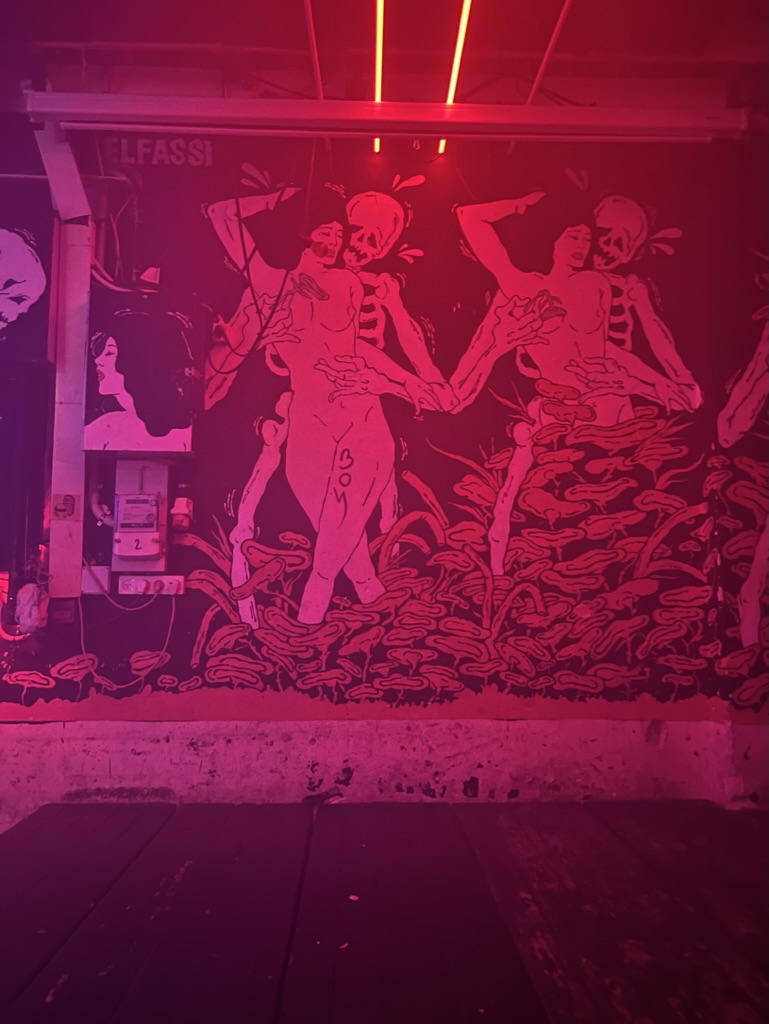
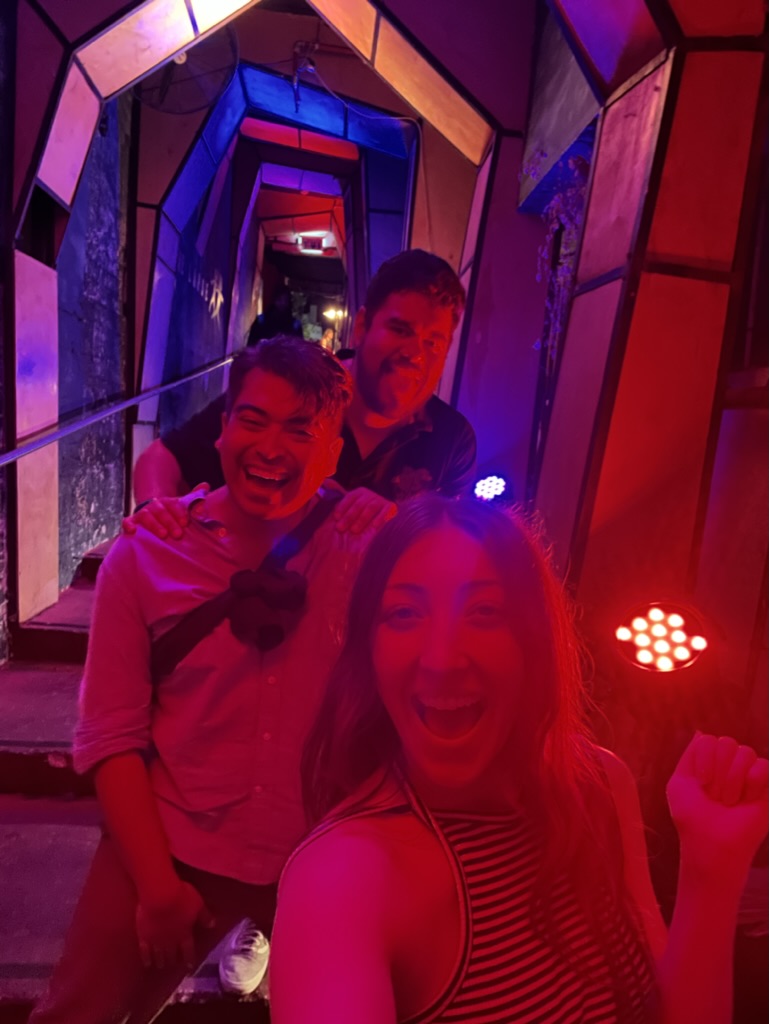
Our Shabbat dinner energized us, perfectly setting the stage for a night out at the clubs, especially since we were celebrating Cristian’s birthday. Given that it was Shabbat, much of Tel Aviv was tranquil, though a few clubs remained open. We started at the quirky, kitschy, music and artist-centric Kuli Alma. Though I’ve not yet been to Meow Wolf in Santa Fe, I imagined the vibe to be somewhat similar, if not better? One caveat, that I and my eyeballs are always unpleasantly reminded of when traveling internationally, is the allowance of indoor smoking – a common practice in many countries. My eyeballs were properly dried out and I had to wash this long mane three times to rid it of the smell. C’est la vie. Nonetheless, the night was enjoyable and I’d happily do it again. As the night waned, our group dwindled and we found ourselves at a more upscale club with classy cocktails and contemporary American music. By 3 a.m., only Eduardo, Cristian, and I remained. We headed to McDonald’s for some late-night, alcohol-buffering snacks. It was bustling, with the aftermath of many McDonald’s meals scattered outside – it was actually shocking. We cleared a pile of paper to-go bags to uncover a table and settled down to savor our kosher Mickey D’s.



By noon on Saturday, I had recovered enough to finish my packing and prepare myself for a delightful afternoon lunch with my friend Caroline. She’s a fellow SIPA student with a focus on sustainability, just like me, who had recently graduated and returned home to Tel Aviv. We had plans to spend the afternoon at Soho House Tel Aviv, where Saturdays are popular for lounging by the pool and dining in the lush garden that envelops the historic property. Set in a 19th-century turreted building at the heart of historic Jaffa, the club melds Bauhaus interior influences with verdant outdoor spaces and a contemporary twist on Middle Eastern-inspired dining. It was the perfect way to conclude my Israel visit before making my way to the airport for the 11-hour return flight to New York City.


It is not lost on me the incredible range of experiences I encountered in just one week in Israel and Palestine. From the stark truths of the Al-Amari camp in Ramallah to the luxury of the Soho House garden in Jaffa – a mere 1 hour drive and 37 miles apart – I was constantly reminded of the breadth of human experience: the lines we draw and how politics, race, religion, and wealth, to name a few, shape our interactions. I had come to Israel with one aim: to learn as much as I could. Why? I’m still searching for a complete answer. However, I’m certain that this journey has honed my ability to approach the world with curiosity, empathy, and a critical mindset. My hope is that, at the very least, I can serve as an advocate in some capacity for the systemically oppressed or burdened in our world.
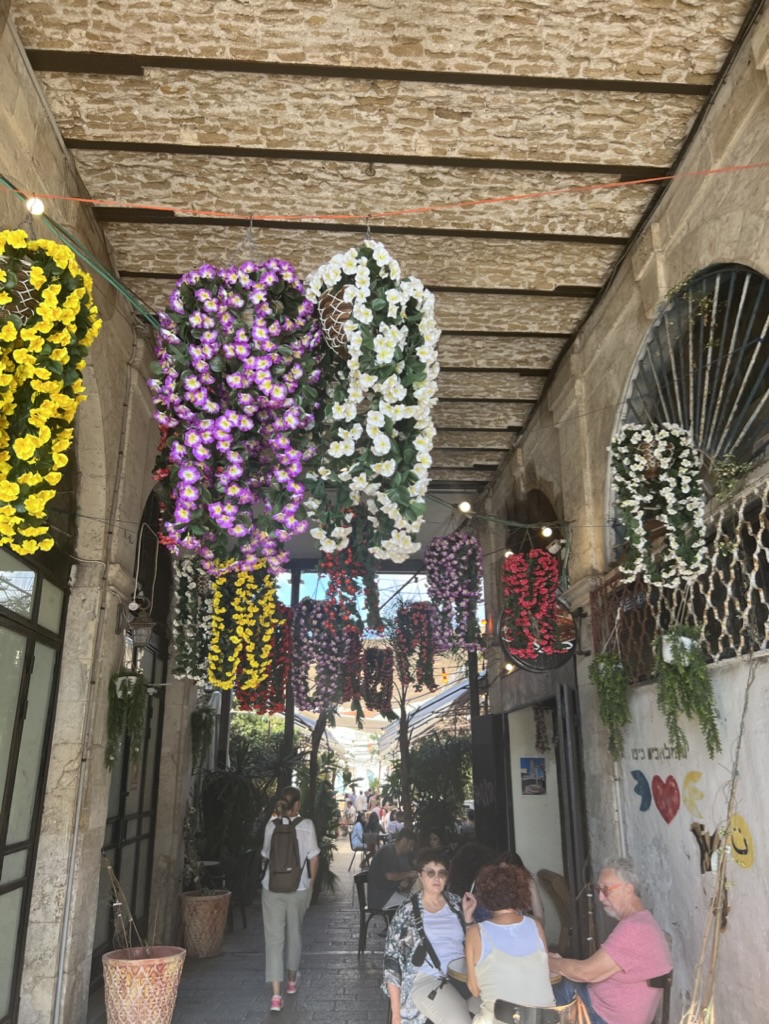
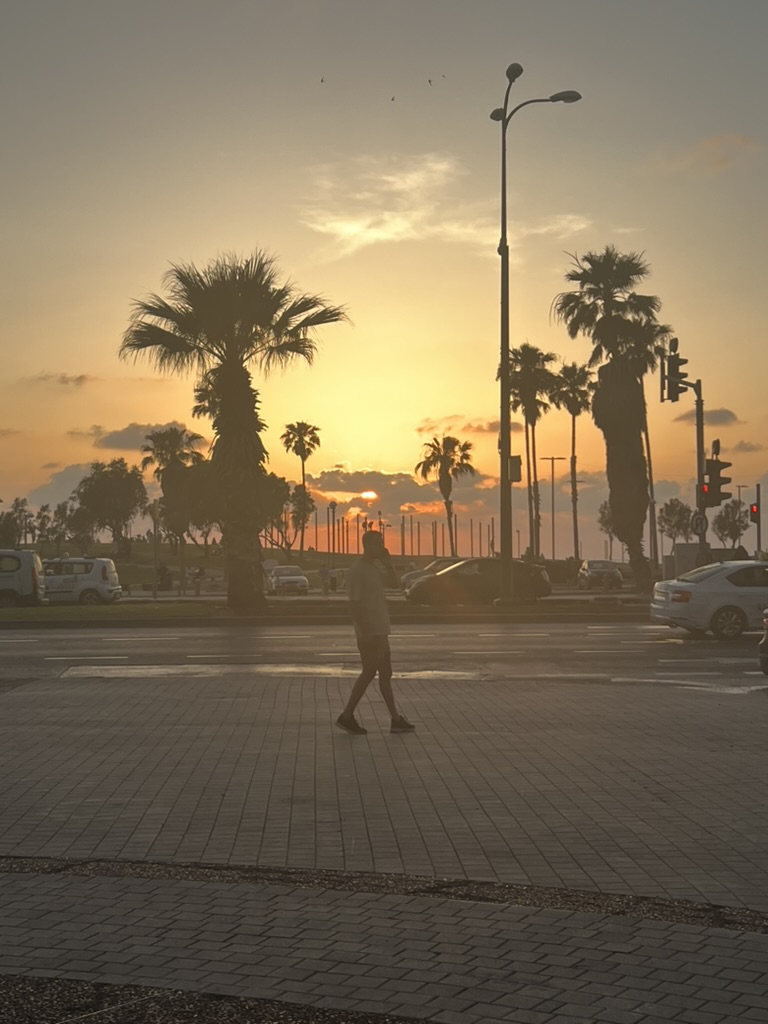

Every corner of Israel and Palestine told a story, and I was privileged to listen.
xo (shabbat shalom, مع السلامة “ma’a al-salamah”),
C
 ClassyCassZ
What are your thoughts? I hope you enjoyed catching up with me!